


Table of Contents
- Introduction: A World-Class Garden on the Suir
- History and Origins: The Congreve Legacy
- Gardens, Collections, and Woodland Walks
- Visitor Information: Access, Facilities, and Seasonal Highlights
- Heritage and Significance: Mount Congreve in Irish Garden History
Introduction: A World-Class Garden on the Suir
Overlooking the serene River Suir just outside Waterford city, Mount Congreve Gardens is widely considered one of the greatest private gardens in Europe — a vast, colourful, and meticulously crafted landscape that delights visitors in every season. Spanning more than 70 acres of woodland, walled gardens, and ornamental plantings, Mount Congreve is a paradise for gardeners, botanists, and anyone who appreciates the harmony of design and nature.
The gardens are the life’s work of Ambrose Congreve (1907–2011), a passionate horticultural visionary who dedicated more than six decades to building one of the world’s finest collections of rare and exotic plants. His devotion transformed the family estate into a botanical masterpiece filled with camellias, magnolias, rhododendrons, azaleas, acers, and flowering shrubs from around the globe.
Today, the property is managed with exceptional care, allowing visitors to wander among vibrant borders, quiet woodland glades, sweeping lawns, and secluded walkways that reveal new textures and colours at every turn. With its peaceful river views and artfully designed paths, Mount Congreve feels both expansive and intimate — a garden made for exploration, reflection, and wonder.
Whether you come for the spring blossoms, summer greenery, autumn fire, or winter sculptural beauty, Mount Congreve Gardens promises an unforgettable experience in the heart of County Waterford.
History and Origins: The Congreve Legacy
The story of Mount Congreve Gardens is inseparable from the remarkable vision of the Congreve family, whose estate dates back to the 18th century. The original Georgian house, completed in the 1760s, stood at the centre of a traditional landed demesne overlooking the River Suir. Although the early generations maintained the grounds in a classical style, the estate would not become a world-renowned garden until the 20th century, under the passionate guidance of Ambrose Congreve.
Born in 1907, Ambrose spent much of his youth exploring the estate’s woodland and riverside paths. Influenced by the great gardens of England, Asia, and North America, as well as the legendary horticulturist Lionel de Rothschild of Exbury Gardens, he developed a lifelong fascination with exotic plants, especially rhododendrons, magnolias, camellias, and rare shrubs from temperate regions.
When Ambrose inherited the estate, he embarked on an extraordinary horticultural mission. Over more than six decades, he acquired, planted, and curated one of the most extensive and diverse private plant collections in Europe. The gardens expanded in all directions — new woodland walks, themed plantings, sweeping borders, and carefully designed vistas appeared year after year, each chosen to highlight seasonal colour and natural beauty.
Ambrose’s dedication brought global recognition. He won 13 Gold Medals at the Chelsea Flower Show, earned international horticultural awards, and welcomed botanists from around the world who came to study his rare species. Yet despite the acclaim, Mount Congreve always retained a sense of personal passion — a garden lovingly shaped rather than clinically engineered.
Following Ambrose Congreve’s death in 2011 at the age of 104, the estate passed into public stewardship. A major restoration and enhancement project ensured that his life’s work would be preserved, revitalised, and made accessible to future generations. Today, Mount Congreve stands not only as a monument to one man’s vision, but as a living landscape that continues to grow, evolve, and inspire.
Gardens, Collections, and Woodland Walks
Few gardens in Ireland offer the scale, diversity, and immersive beauty found at Mount Congreve Gardens. Spanning more than 70 acres of landscaped grounds and an additional 4 miles of woodland walks, the estate is a vast, living tapestry of colour and texture. Every turn reveals a new scene — from towering tree-lined paths to secret glades, reflective ponds, and vibrant borders glowing with seasonal brilliance.
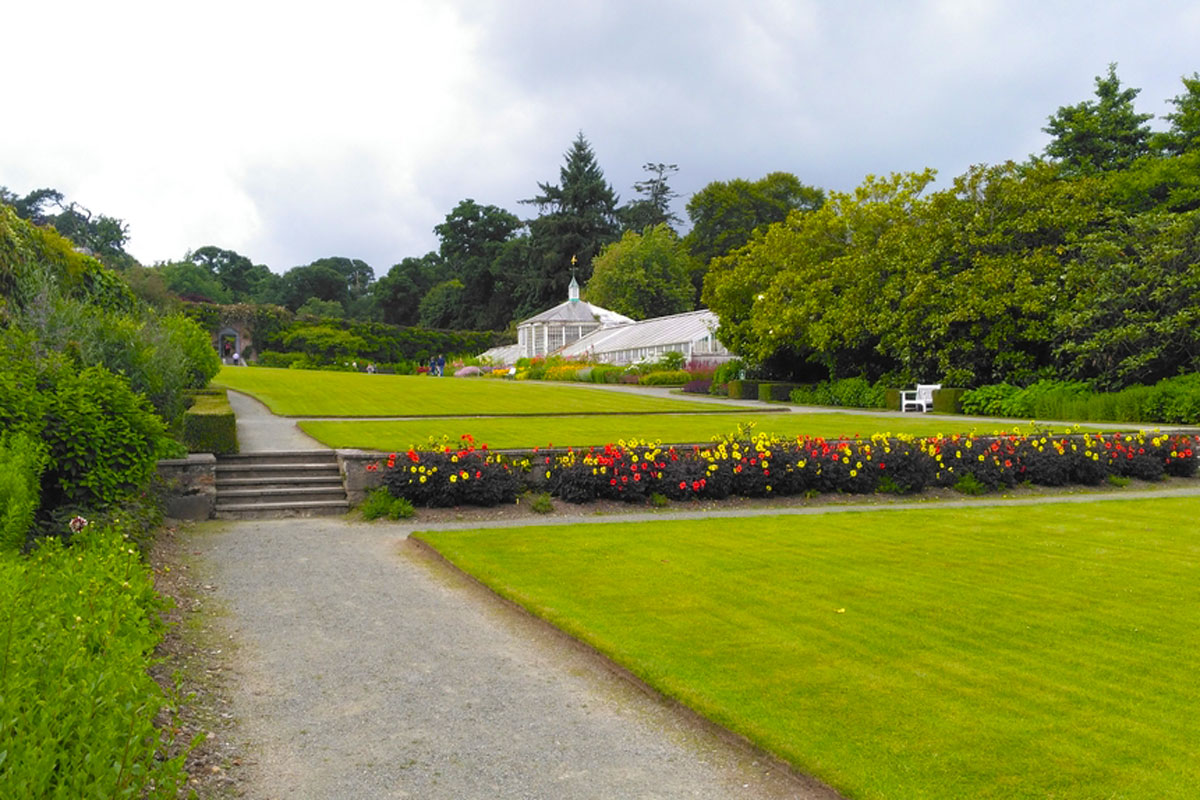
At the heart of the estate lies the Walled Garden, one of the largest of its kind in Ireland. Enclosed by historic stone walls, it contains immaculate lawns, intricate planting beds, and an astonishing array of herbaceous perennials, flowering shrubs, and heritage roses. The geometric layout and abundant colour make it a highlight in every season, especially during late spring and midsummer.
Mount Congreve is best known for its world-class rhododendron, magnolia, and camellia collections. In early spring, the woodland explodes into a spectacle of colour as thousands of specimens bloom in every shade imaginable — from delicate pastels to deep, dramatic purples and reds. Many were sourced from Asia, Australasia, and North America, making the collection one of the most significant in Europe.
The gardens also feature rare and remarkable trees: sweeping avenues of acer species, towering conifers, sculptural ancient oaks, and elegant specimen trees from across the globe. The range of textures and forms creates a landscape that feels both curated and wild, structured yet deeply natural.
A series of woodland and riverside walks guide visitors along peaceful trails lined with ferns, bluebells, and seasonal wildflowers. The Suir River Walk offers serene waterside views, while elevated paths reveal panoramas across the valley and estate. These trails give Mount Congreve its sense of serenity — long, quiet routes that immerse visitors in a world of pure horticultural beauty.
Whether you wander through manicured gardens, explore shaded woodland paths, or pause beside reflective pools and sweeping lawns, Mount Congreve offers an atmosphere of discovery and deep tranquillity. It is a garden to be experienced slowly — a place where the world feels spacious, colourful, and wonderfully alive.
Visitor Information: Access, Facilities, and Seasonal Highlights
Mount Congreve Gardens is located just outside Waterford City, along the scenic banks of the River Suir and a short distance from the Waterford Greenway. Easy to reach by car, bike, or public transport, the estate is one of the region’s most accessible and rewarding day trips for garden lovers, families, and visitors exploring Ireland’s southeast.
Drivers will find the gardens well signposted from the N25 and surrounding routes, with ample parking adjacent to the entrance. Public transport options include local buses from Waterford City to nearby Kilmeaden, followed by a brief walk or taxi. Many visitors also arrive via the Greenway, which passes directly behind the estate and offers a scenic cycling and walking route.
Facilities at Mount Congreve are modern, welcoming, and designed to enhance the visitor experience. These include a visitor centre, ticket office, café and restaurant, plant sales area, restrooms, and accessible pathways through major sections of the gardens. Interpretive signage and garden maps help guests explore the vast estate at their own pace, while guided tours are available seasonally for those interested in horticultural detail.
Mount Congreve is particularly popular with families. Children enjoy the open lawns, forest trails, and the freedom to wander through safe, enclosed garden areas. Picnics are welcome in designated spots, and the café offers fresh local produce with views across the gardens.
Seasonal highlights vary dramatically throughout the year. Spring is a riot of colour with magnolias, rhododendrons, and camellias bursting into bloom. Summer brings lush borders, roses, and long days perfect for woodland walks. Autumn transforms the estate with fiery acers and gold-toned foliage, while winter reveals stark silhouettes of rare trees, frost-covered lawns, and a peaceful atmosphere ideal for reflective strolls.
With excellent facilities, immersive landscapes, and year-round charm, Mount Congreve Gardens offers an experience that appeals to seasoned gardeners and casual visitors alike.
Heritage and Significance: Mount Congreve in Irish Garden History
Mount Congreve Gardens is recognised as one of the most important horticultural achievements in Ireland — and indeed, in Europe. Its extraordinary breadth of planting, international species collection, and meticulously designed landscapes place it among the great private gardens of the 20th century. Yet what sets Mount Congreve apart is not only its size or diversity but the singular vision behind it.
For more than sixty years, Ambrose Congreve poured his passion, resources, and energy into the estate, assembling a plant collection that spans continents and climatic zones. His dedication, curiosity, and horticultural expertise elevated the gardens to world-class status, earning international awards and drawing botanists and enthusiasts from around the globe.
Culturally, Mount Congreve represents a significant chapter in Ireland’s gardening heritage. It showcases the nation’s ability to nurture exotic species, experiment with innovative planting combinations, and create landscapes that feel simultaneously designed and natural. The estate also reflects the broader tradition of Irish country gardens — places where artistry, climate, and stewardship combine to form living works of beauty.
The garden’s woodlands, riverfront paths, and biodiverse habitats also contribute to regional ecology. Many rare plants and mature trees provide essential food and shelter for birds, insects, and small mammals, while careful management ensures that this diversity thrives. The estate’s connection to the River Suir adds further ecological value, creating a corridor where natural and designed environments meet.
Under public stewardship and ongoing restoration, Mount Congreve continues to evolve. New planting initiatives, conservation projects, and enhanced visitor facilities ensure that Ambrose Congreve’s legacy remains vibrant and accessible. The estate stands as a testament to what vision, patience, and a love of beauty can create — a place where horticulture, heritage, and nature unite in enduring harmony.
Natural Wonders
- The Giant’s Causeway – A UNESCO World Heritage Site featuring unique hexagonal basalt columns.
- Carrick-a-Rede Rope Bridge – A thrilling rope bridge linking the mainland to a small island.
- Cushendun Caves – Stunning caves featured in Game of Thrones.
- Glens of Antrim – A series of nine beautiful glens offering breathtaking scenery and walking trails.
- Fair Head – A dramatic cliff with incredible views, popular for hiking and rock climbing.
Castles and Historic Sites
- Dunluce Castle – A medieval castle perched on a dramatic cliff overlooking the sea.
- Carrickfergus Castle – A well-preserved Norman castle dating back to the 12th century.
- Shane’s Castle – A historic estate with a ruined castle and stunning grounds.
Coastal Attractions
- The Dark Hedges – A hauntingly beautiful avenue of beech trees featured in Game of Thrones.
- Ballycastle Beach – A scenic spot for relaxation and views of Rathlin Island.
- White Park Bay – A picturesque beach with stunning coastal views.
Islands and Marine Attractions
- Rathlin Island – Known for its wildlife, seabird colonies, and the Rathlin West Light Seabird Centre.
- Ballintoy Harbour – A charming harbor and filming location for Game of Thrones.
Museums and Cultural Sites
- Ulster Folk and Transport Museum – Showcasing traditional Irish heritage and transportation history.
- Belfast Lough – Known for maritime heritage, including the Titanic Quarter.
Scenic Drives and Routes
- Causeway Coastal Route – A stunning drive featuring some of Northern Ireland’s most iconic attractions.
- Slemish Mountain – Said to be the first home of Saint Patrick in Ireland, popular for hiking.
Unique Experiences
- Old Bushmills Distillery – One of the oldest whiskey distilleries in the world, offering tours and tastings.
- Glenarm Castle and Gardens – A stunning estate with historic gardens and seasonal events.
These attractions make County Antrim a must-visit destination for nature lovers, history buffs, and adventure seekers alike.
Helpful Resources