



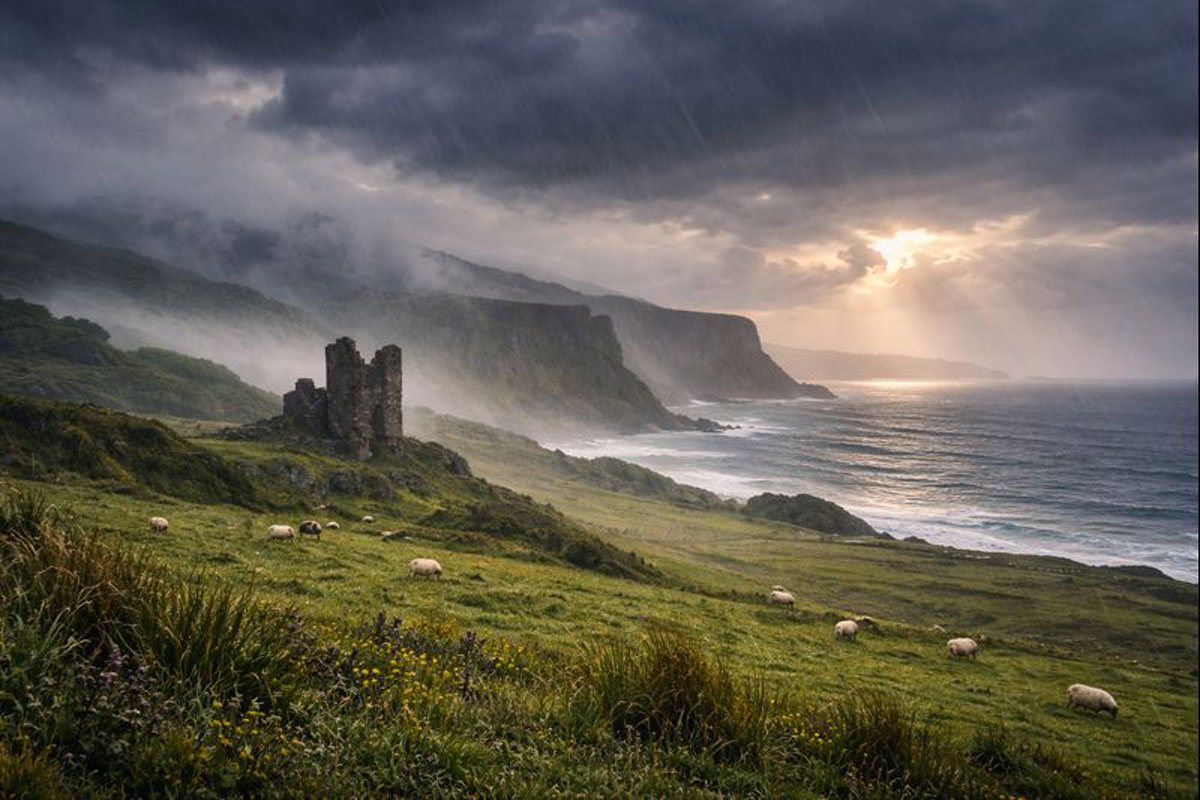
Ireland is often imagined under clear skies and soft sunshine, but its true character is revealed in moments of mist, rain, and heavy cloud. These are not conditions that diminish the landscape—they define it. From drifting fog to sudden downpours and dramatic skies, Ireland’s weather shapes how the country looks, feels, and is remembered.
To experience Ireland only on bright days is to see just one side of its story. It is in grey light, quiet rain, and low-hanging clouds that the land becomes most atmospheric, emotional, and deeply Irish. These are the conditions that have shaped daily life for centuries and continue to influence how the country is experienced today.
Table of Contents
- Part 1 – The Quiet Magic of Mist Across the Irish Landscape
- Part 2 – Rain: The Lifeblood of Ireland’s Green Heart
- Part 3 – Moody Skies, Shifting Light, and Dramatic Atmosphere
- Part 4 – Stone, Water, and Weather-Shaped Beauty
- Part 5 – Embracing Ireland as It Truly Is
The Quiet Magic of Mist Across the Irish Landscape
Mist is one of Ireland’s most enchanting natural elements. It drifts gently across hills, settles into valleys, and wraps itself around trees, ruins, and waterways. Rather than blocking the view, mist invites the eye to slow down, revealing the landscape in layers rather than all at once.
In misty conditions, familiar places feel transformed. Roads disappear into pale grey distance, fields fade softly at their edges, and hills rise like shadows from the land. The scenery becomes quieter and more intimate, encouraging a sense of stillness that is often lost on clear, busy days.
Mist also carries a strong emotional quality. It blurs the boundary between what is seen and what is imagined, lending the landscape a dreamlike character. Old ruins feel older, forests feel deeper, and even modern roads can take on a timeless quality. These are moments when Ireland feels less like a destination and more like a place suspended between past and present.
Rain: The Lifeblood of Ireland’s Green Heart
Rain is inseparable from Ireland’s identity. It feeds the fields, nourishes the hedgerows, and keeps the countryside vibrant throughout the year. Without it, the island would not be the lush, living landscape it is known for.
But rain does more than sustain growth—it transforms texture and atmosphere. Stone walls darken and glisten, paths shine underfoot, and fields take on deeper, richer tones of green. Rivers swell gently, streams quicken their pace, and the land feels freshly awakened.
Rain in Ireland is often steady rather than severe. It creates a rhythm that encourages slower movement and quieter observation. Sounds soften, colours deepen, and the air fills with the earthy scent of grass, soil, and wet stone. These conditions encourage reflection and make even short walks feel immersive.
Rather than interrupting travel, rain often enhances it. It reduces crowds, draws people inward, and creates moments of calm that linger in memory long after the weather clears.
Moody Skies, Shifting Light, and Dramatic Atmosphere
Ireland’s skies are constantly in motion. Clouds roll in from the Atlantic, gather and break apart, and allow light to spill across the landscape in unexpected ways. This ever-changing sky creates dramatic contrasts between shadow and illumination.
Under heavy cloud, the land feels grounded and solid. Colours become muted, lines soften, and the scenery feels weighty and enduring. When the sun breaks through—even briefly—it highlights fields, hills, or water like a spotlight on a stage, transforming the scene in seconds.
These moments of light are fleeting, and that impermanence is what makes them powerful. The land seems alive beneath the sky, constantly responding to what unfolds above it. No two views are ever quite the same, even from the same spot.
Moody skies give Ireland emotional depth. They encourage contemplation and reinforce the sense that the landscape is shaped as much by mood and atmosphere as by physical features.
Stone, Water, and Weather-Shaped Beauty
Ireland’s built environment was shaped by weather, and it shows. Stone cottages, dry-stone walls, churches, and ruins look most authentic beneath grey skies or after rainfall. Moisture brings out the texture of stone, highlighting age, craftsmanship, and centuries of endurance.
Rain and mist soften harsh edges and help these structures blend naturally into the land. Moss, lichen, and weathered surfaces tell stories of survival and adaptation. These buildings were never meant to stand apart from nature—they were built to endure it.
Water plays a central role in this relationship. Lakes mirror dark skies with haunting clarity, waterfalls surge with renewed energy, and rivers carve their way through valleys with quiet persistence. Weather connects land, stone, and water into a single living system.
In these conditions, Ireland feels closer to its past. The landscape reveals how generations lived alongside the elements, adapting rather than resisting, and finding beauty within hardship.
Embracing Ireland as It Truly Is
Ireland is not a destination built around guaranteed sunshine. It is a place that rewards those who accept its natural rhythms and changing moods. Mist, rain, and cloud are not inconveniences—they are essential parts of the experience.
Visitors who embrace Ireland’s weather often discover a deeper connection to the country. Quiet roads, empty viewpoints, and subdued colours create space for reflection and appreciation. The absence of perfection allows the land to feel honest and unfiltered.
Grey skies and soft rain slow the pace of travel, encouraging visitors to notice small details—a stone wall slick with rain, a field glowing under cloud, a quiet moment beside a river. These are the experiences that linger long after the journey ends.
To see Ireland only in perfect conditions is to miss its quieter beauty. It is in the mist, the rain, and the moody skies that Ireland reveals its true character—timeless, resilient, and deeply atmospheric.