


Table of Contents
- A Sacred Landscape Older Than Newgrange
- The Tomb of the Equinox: Cairn T and Its Alignments
- The Panoramic Views and Hike to the Summit
- Visitor Information and How to Get There
- Irish Mythology and the Mystery of Loughcrew
A Sacred Landscape Older Than Newgrange
Hidden among the rolling hills of County Meath lies one of Ireland’s most remarkable — yet often overlooked — ancient sites: the Loughcrew Cairns. Older than Newgrange and less crowded, these Neolithic passage tombs offer not only a spiritual glimpse into prehistoric Ireland, but also breathtaking views of the surrounding countryside.
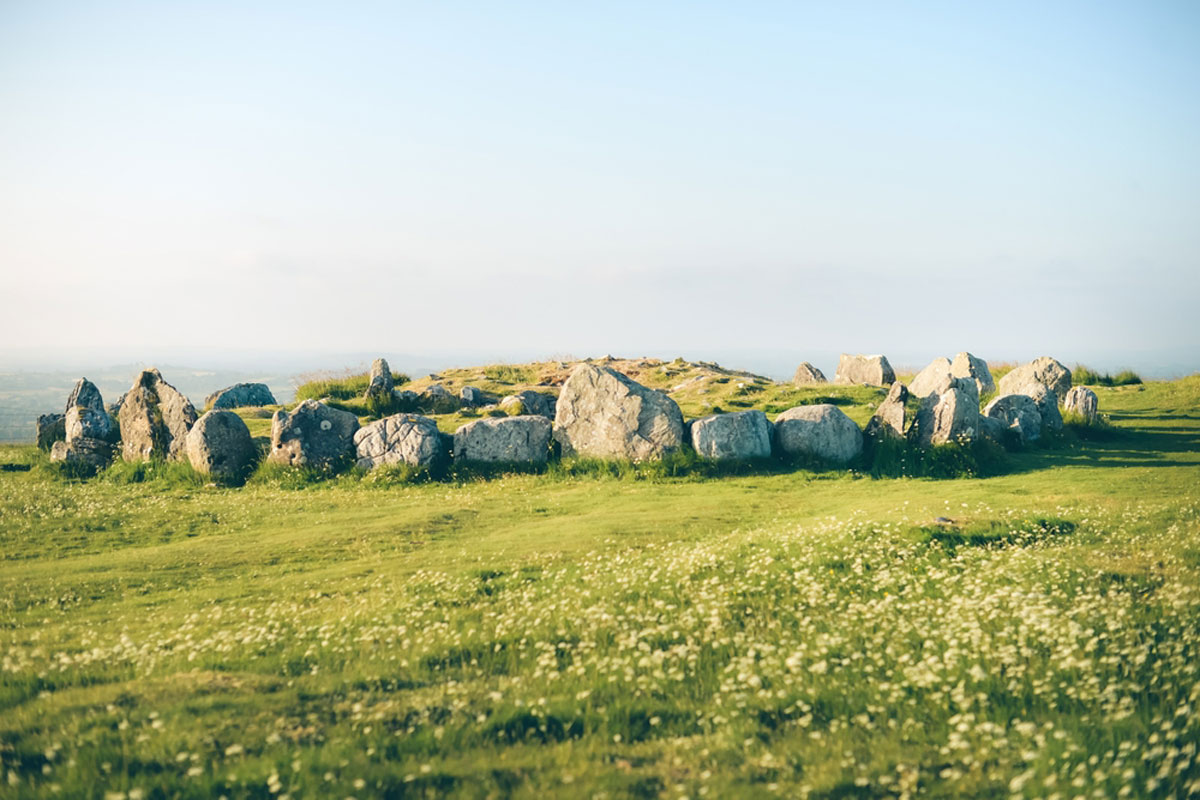
Known locally as Sliabh na Caillí, or “the Hill of the Hag,” Loughcrew is a cluster of over twenty ancient cairns spread across several hilltops. These tombs were constructed more than 5,000 years ago — around 3,300 BCE — making them some of the oldest man-made structures in Europe. Despite their historical importance, they remain blissfully free of the crowds found at more commercialized heritage sites.
What truly sets Loughcrew apart is the mystical alignment of its most famous tomb, Cairn T, which is designed to capture the rising sun during the spring and autumn equinoxes. Each year, on these special mornings, light enters the chamber and illuminates its intricate stone carvings — a phenomenon that continues to inspire awe and wonder today.
The Tomb of the Equinox: Cairn T and Its Alignments
At the heart of the Loughcrew complex lies Cairn T, the most significant and best-preserved of all the passage tombs on the hill. Built around 3,300 BCE, this tomb serves not just as a burial site, but as an ancient observatory aligned with the rising sun during the spring and autumn equinoxes.
Twice a year, around March 20 and September 22, the sun rises in perfect alignment with the tomb’s narrow passageway. As the rays of morning light enter, they travel deep into the chamber and gradually illuminate a series of elaborately carved symbols on the rear stone. These carvings — including solar discs, concentric circles, and leaf-like motifs — are thought to represent the sun, the changing seasons, or spiritual rebirth.
This astronomical precision reveals the sophisticated knowledge held by the Neolithic builders, who constructed these tombs with stone tools and without written language. The phenomenon is similar to the famous winter solstice light show at Newgrange, but far fewer visitors witness it at Loughcrew, giving the experience a more personal, mystical quality.
The Office of Public Works (OPW) allows a limited number of people to enter Cairn T during the equinoxes via an online lottery system. For those who miss the equinox, a replica of the carvings and a solar simulation are on display at the nearby Loughcrew Megalithic Centre.
Whether or not you visit during these sacred alignments, stepping inside Cairn T offers a profound connection to Ireland’s prehistoric past — a world where astronomy, spirituality, and nature were deeply intertwined.
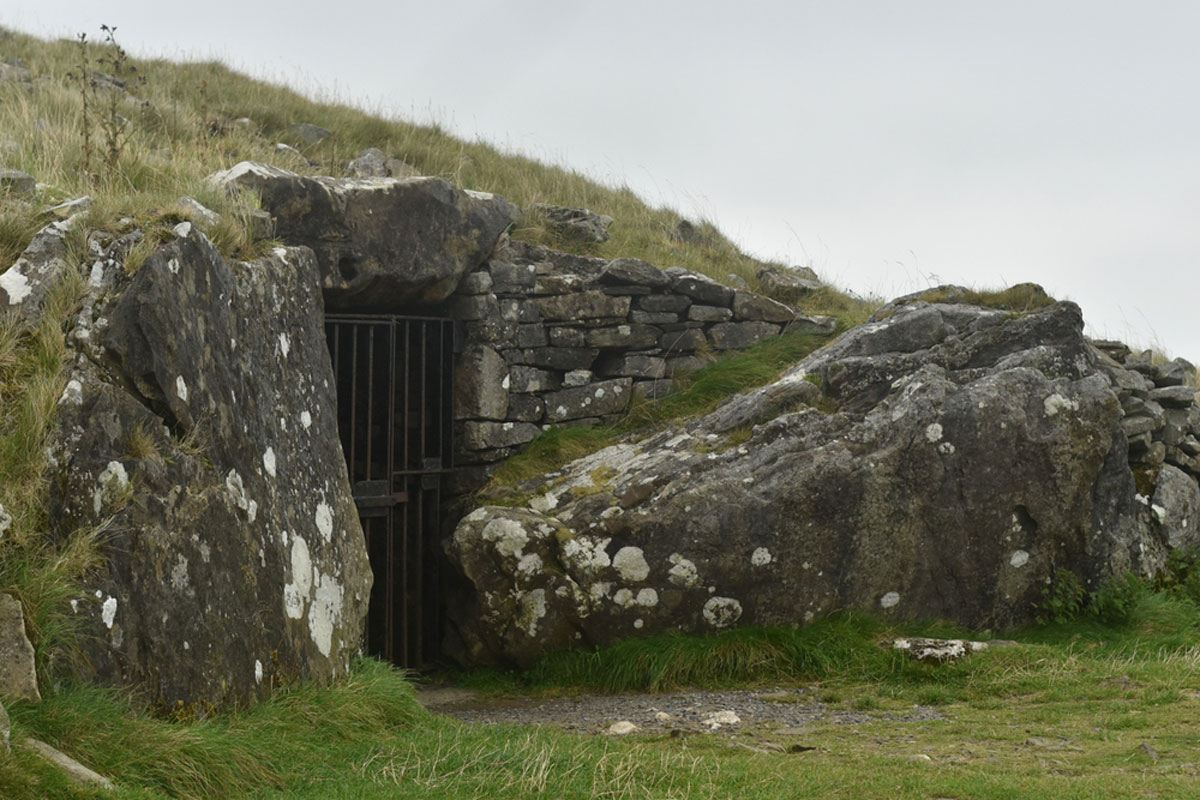
 The entrance of Cairn T
The Panoramic Views and Hike to the Summit
Visiting Loughcrew is as much about the journey as it is the destination. Perched on one of Meath’s highest points, Sliabh na Caillí offers hikers a moderately steep but rewarding climb. The path to Cairn T winds through grassy slopes and quiet farmland, gradually revealing sweeping views as you ascend.
On a clear day, the summit delivers 360-degree panoramic vistas across the Irish Midlands. You can see as far as the Mourne Mountains to the north, and even catch glimpses of Slieve Gullion in County Armagh and the Hill of Tara in the distance. The elevated setting reinforces the tomb’s spiritual significance — it was likely chosen for its commanding view of the land and sky.
The walk itself takes about 10–15 minutes from the small car park, with a few benches along the way for resting and taking in the scenery. While the route is well-trodden, it can be slippery after rain, so proper footwear is essential. There are no facilities at the top, so it’s wise to bring water and anything else you might need.
What makes this hike especially memorable is the peacefulness. Unlike Newgrange or other major heritage sites, Loughcrew is rarely crowded, offering a more reflective and authentic encounter with Ireland’s ancient past. It’s not uncommon to have the entire hilltop to yourself — just you, the stones, and the sky.
Whether you’re a heritage enthusiast, a casual hiker, or simply seeking a serene day out, the walk to Loughcrew Cairns rewards with a unique mix of history, nature, and timeless beauty.
Visitor Information and How to Get There
Despite its historical importance, Loughcrew Cairns remains one of Ireland’s lesser-known ancient sites — which makes visiting it a uniquely peaceful experience. Here’s what you need to know before you go.
📍 Location
Loughcrew is located near the village of Oldcastle in County Meath, about 90 minutes northwest of Dublin. It’s best accessed by car, as public transport in the area is limited. Set your GPS to “Loughcrew Megalithic Centre,” which is adjacent to the hill path leading to Cairn T.
🕒 Opening Times & Access
- Cairn T is open to the public year-round during daylight hours.
- Interior access is restricted; guided access may be available through the Office of Public Works (OPW) or during special events like the equinox.
- There are no gates or ticket booths — entry is free.
🅿️ Parking
A small gravel car park is located at the base of the hill. From there, it’s a 10–15 minute uphill walk to the main cairn.
🍽️ Facilities
The Loughcrew Megalithic Centre nearby offers:
- A café with light meals and coffee
- Toilets and picnic benches
- Guided tours and exhibitions
- Family-friendly activities and a fairy trail
🎟️ Events
If you’re hoping to witness the equinox sunrise alignment, keep an eye on OPW announcements. Attendance is free, but registration is required and demand is high.
Whether you’re dropping by for an hour or making a day of it with a visit to the nearby heritage centre, Loughcrew is an ideal stop for those looking to connect with Ireland’s ancient spirit — without the tourist crowds.
Irish Mythology and the Mystery of Loughcrew
Like many ancient sites in Ireland, the Loughcrew Cairns are steeped in myth and mystery. According to local folklore, the hill is associated with the legendary figure known as the Cailleach Bhéarra — the divine hag or witch of Irish mythology.
The name Sliabh na Caillí translates to “Hill of the Hag,” and the legend tells of the Cailleach leaping from summit to summit, dropping massive stones from her apron to form the cairns. She was said to be a goddess of the land, fertility, and winter — a powerful presence who shaped the landscape itself. One of the cairns is even referred to as the “Hag’s Chair,” a massive stone believed to be her throne.
These stories suggest that Loughcrew was more than just a burial site. It was a place of seasonal ritual, celestial alignment, and spiritual connection with the natural world. The myth of the Cailleach aligns closely with the astronomical significance of Cairn T — reinforcing the idea that early Irish communities had a deeply sacred relationship with both earth and sky.
The carvings inside the tombs add to the mystery. Spirals, suns, and leaf-like motifs continue to spark debate: Were they calendars? Maps? Spiritual symbols? No one knows for certain — and that’s part of Loughcrew’s enduring charm. It is a place where myth, memory, and mystery intertwine.
For modern visitors, the site offers not only a window into the Neolithic world, but also a chance to walk the same hills once imagined to be shaped by gods and giants. Loughcrew remains a timeless place — sacred, silent, and still whispering the stories of Ireland’s earliest people.