



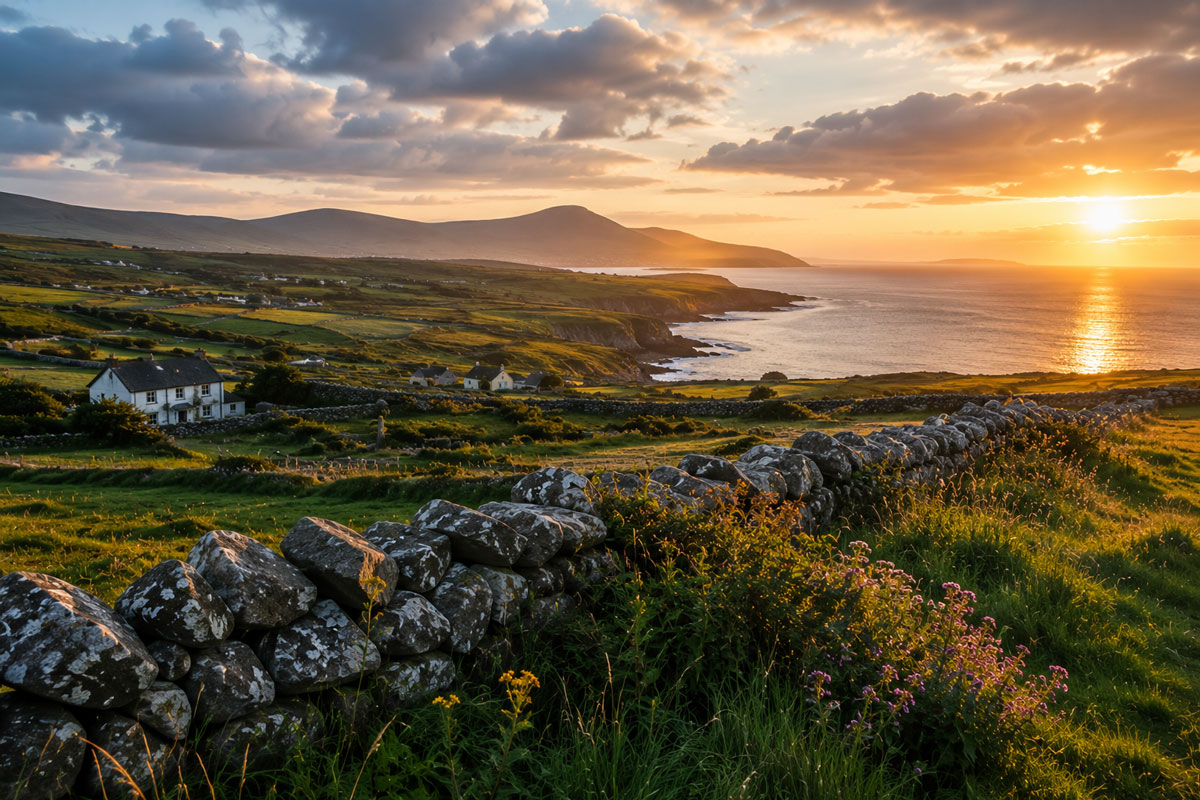
Many people visit Ireland expecting beautiful scenery, historic castles, and lively pubs. They certainly find those things. But what often surprises first-time visitors is that the country leaves an impression that goes beyond its landmarks. Long after the photographs have been shared and the souvenirs unpacked, many travelers find themselves thinking about something harder to describe.
They remember a conversation with a stranger, a quiet road through the countryside, the sound of traditional music drifting from a pub doorway, or the feeling of standing in a place where stories seem to linger in the landscape. These experiences are part of what many people call Ireland’s soul.
While every traveler experiences Ireland differently, there are certain qualities that help explain why the country leaves such a lasting impression. For those visiting for the first time, understanding these elements can help you connect with Ireland on a deeper level.
Table of Contents
- The Importance of Place
- Why Conversation Matters
- History Is Never Far Away
- Music as a Living Tradition
- The Landscape and Its Stories
- Learning to Slow Down
- Finding Ireland’s Soul for Yourself
The Importance of Place
One of the first things many visitors notice about Ireland is the strong connection people have to place. Towns, villages, counties, and even individual fields often carry stories that stretch back generations.
In Ireland, geography is more than a collection of locations on a map. Landscapes are woven into family histories, local traditions, and cultural identity. A village may be known for an ancient ruin, a historic event, or a story that has been passed down for centuries.
This sense of place helps create the feeling that every corner of Ireland has a story worth telling. Travelers who venture beyond the major attractions often discover that some of the most memorable experiences happen in places they had never planned to visit.
The more time you spend exploring, the more you begin to appreciate how deeply the land and its people are connected.
Why Conversation Matters
Ireland is famous for its friendliness, but that reputation is about more than simple politeness. Conversation is an important part of daily life.
Visitors often find that casual interactions quickly become longer conversations. A simple question about directions can turn into a discussion about local history. Ordering a coffee may lead to recommendations for nearby attractions. Sitting in a pub can result in stories, laughter, and unexpected friendships.
These conversations are often genuine rather than transactional. There is a strong tradition of storytelling in Ireland, and many people enjoy sharing local knowledge, family history, or humorous observations.
For first-time visitors, embracing these interactions can open doors to experiences that never appear in guidebooks. Some of the most valuable travel advice comes from the people who call Ireland home.
History Is Never Far Away
In Ireland, history often feels remarkably close. Ancient ruins stand beside modern roads. Medieval churches overlook active town centers. Castles rise above fields where farmers still work the land.
This blending of past and present creates a unique atmosphere. History is not confined to museums; it is part of the everyday landscape.
Visitors may encounter prehistoric monuments older than the pyramids, monastic settlements that have stood for over a thousand years, or villages that retain traditions stretching back generations.
Even ordinary places often have extraordinary stories attached to them. A quiet hill may have connections to ancient kings. A small harbor may have played a role in emigration or trade. A seemingly simple stone ruin may hold centuries of local memory.
This constant presence of history contributes greatly to Ireland’s distinctive character.
Music as a Living Tradition
Traditional Irish music is often one of the highlights of a visit. Unlike performances designed solely for tourists, traditional music remains a living part of Irish culture.
Across the country, musicians gather in pubs and community spaces to play tunes that have been passed down through generations. These informal sessions can be spontaneous, welcoming, and deeply moving.
Even for visitors unfamiliar with Irish music, there is something special about hearing a fiddle, flute, accordion, or bodhrán played in a setting where the tradition continues to thrive.
The music often reflects the same qualities found throughout Irish culture: storytelling, community, emotion, and a connection to the past.
For many travelers, an evening spent listening to traditional music becomes one of the most memorable moments of their trip.
The Landscape and Its Stories
Ireland’s landscapes are beautiful, but their significance often goes beyond scenery. Mountains, lakes, rivers, and coastlines frequently carry stories rooted in mythology, folklore, and history.
Ancient legends are woven into the landscape. Hills are associated with kings and warriors. Lakes are linked to myths and supernatural tales. Coastal cliffs inspire stories that have been told for centuries.
This connection between landscape and storytelling gives many places a deeper sense of meaning. Visitors are not simply looking at scenery; they are standing in locations that have inspired generations of stories and traditions.
Whether exploring a rugged coastline or driving through rolling countryside, it is easy to understand why the Irish imagination has long been shaped by the land.
Learning to Slow Down
One of the biggest mistakes first-time visitors make is trying to see too much.
Ireland rewards a slower pace of travel. While it can be tempting to rush between attractions, many of the country’s best experiences happen when you leave room for spontaneity.
A scenic detour, an unexpected village, a conversation with a local, or an extra hour spent enjoying a view can become the highlight of an entire trip.
The Irish approach to life often places greater value on experiences than efficiency. Travelers who embrace this mindset frequently discover a more meaningful connection to the places they visit.
Rather than focusing solely on what you can see, consider how you can experience the country more fully.
Finding Ireland’s Soul for Yourself
There is no single definition of Ireland’s soul. For some visitors, it is found in traditional music and lively conversation. For others, it is discovered in ancient landscapes, historic sites, or the warmth of local communities.
What makes Ireland special is the way these elements come together. The landscapes, stories, history, and people create an atmosphere that feels both timeless and welcoming.
First-time visitors often arrive expecting beautiful scenery and famous attractions. They leave remembering something less tangible but perhaps more meaningful—a feeling of connection to a place that values stories, community, and a deep sense of belonging.
That feeling is difficult to define, but once experienced, it is rarely forgotten. It is what brings many travelers back to Ireland again and again, each visit revealing another layer of the country’s enduring spirit.