


Ireland is often reduced to one color in the imagination: green. Emerald fields, rolling hills, and soft pastures dominate postcards and travel brochures. But anyone who has spent time moving slowly through the Irish landscape knows that the country is far more complex than a single shade.
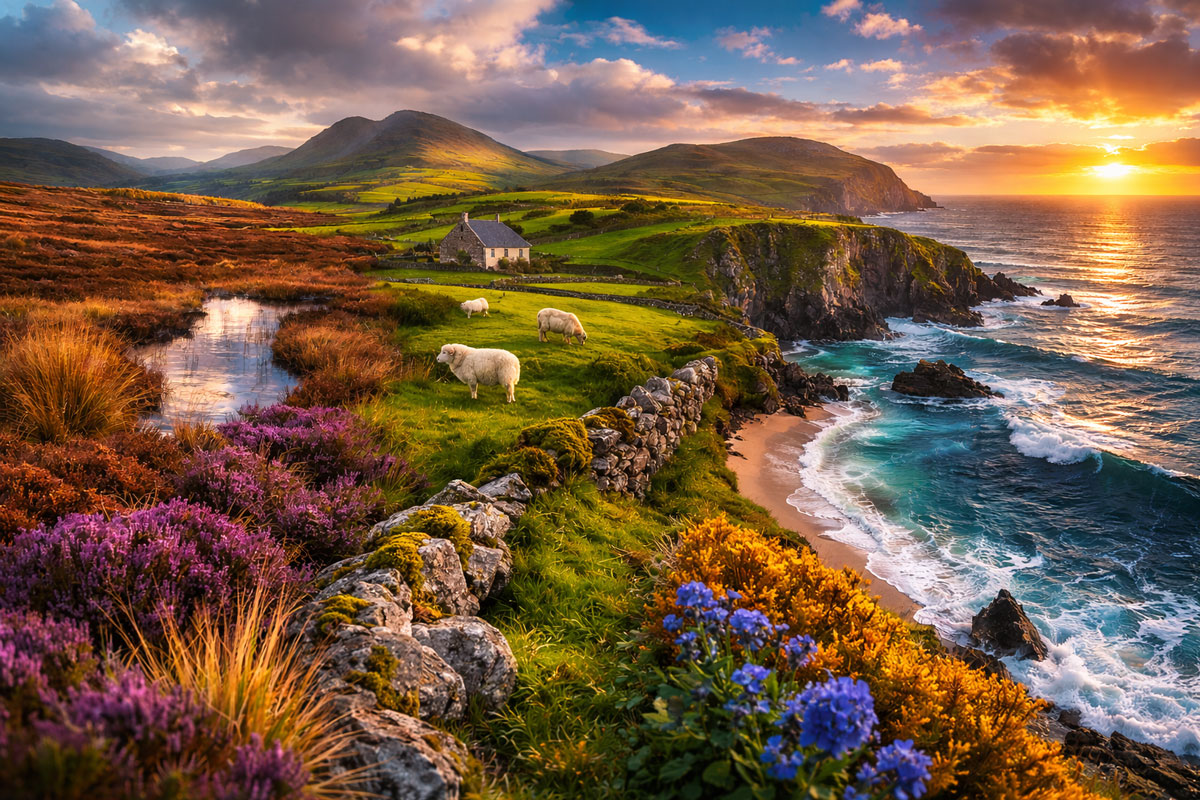
Ireland is a country of layered color. Bogland browns stretch across the west. Atlantic blues shift from steel to turquoise within minutes. Heather purples bloom quietly against muted hills. Autumn hedgerows glow gold. And even the famous greens vary dramatically — from deep moss to electric spring grass.
To understand Ireland visually is to understand its colors. They change with the weather, the season, the light, and even the hour of the day. This guide explores the true palette of Ireland — not just the postcard version, but the living, breathing spectrum that shapes its identity.
Table of Contents
- Part 1 – Beyond “Emerald”: The Myth of One Green Ireland
- Part 2 – Bogland Browns and Peat Tones
- Part 3 – Atlantic Blues and Coastal Light
- Part 4 – Seasonal Shifts: Golds, Purples, and Silvers
- Part 5 – How Weather Transforms Ireland’s Colors
- FAQ – Ireland’s Landscape Colors
Beyond “Emerald”: The Myth of One Green Ireland
The nickname “The Emerald Isle” captures something true — Ireland is green. But it is not one green. It is dozens.
Spring brings bright, almost luminous pastureland. Summer deepens those tones into richer shades. In the west, moss-covered stone walls introduce darker greens, while inland valleys may appear softer and more muted.
Green in Ireland is rarely flat. It is textured. It’s broken by rock, by shadow, by grazing sheep, by shifting cloud. Even within a single field, you may see multiple tones depending on light and moisture.
To reduce Ireland to one color is to miss its subtlety. The true beauty lies in variation.
Bogland Browns and Peat Tones
Travel west into counties like Mayo, Galway, and Donegal, and the landscape begins to change. Vast stretches of bogland introduce deep browns, rusty reds, and earthy peat tones that contrast sharply with pasture green.
These bogs are not dull — they are richly layered. In certain light, they glow amber. In overcast conditions, they appear dark and velvety. Pools of water reflect the sky, adding flashes of silver and blue across the brown terrain.
Heather adds texture, particularly in late summer when purples emerge against the peat. The result is a landscape that feels ancient and grounded, less polished than farmland, more elemental.
Bogland colors are subtle but powerful. They remind visitors that Ireland is not only fertile pasture but also wild, untamed terrain shaped by time.
Atlantic Blues and Coastal Light
Ireland’s coastline introduces another dramatic shift in color. The Atlantic is rarely the same shade twice.
On calm days, the sea may turn turquoise near shallow coves. Under heavy skies, it deepens into slate blue or steel grey. In stormy weather, white foam cuts through dark waters in sharp contrast.
Cliffs amplify these tones. Dark rock faces intensify the blue of the sea, while sandy beaches soften the transition between land and water. In counties like Clare, Donegal, and Cork, the meeting of cliff and ocean creates one of Ireland’s most dynamic color pairings.
Light plays an enormous role. Low sun angles — especially in the evening — can warm the cliffs to golden hues while the ocean remains cool blue, creating striking visual tension.
Seasonal Shifts: Golds, Purples, and Silvers
Ireland’s colors shift dramatically with the seasons.
Spring
Fresh grass brings almost neon greens. Fields appear luminous after rain, and hedgerows begin to bloom softly.
Summer
Long daylight hours deepen color saturation. Coastal blues brighten, and late sunsets cast golden tones across hills.
Autumn
Autumn is perhaps Ireland’s most underrated season for color. Hedgerows turn amber and gold. Grasses soften into muted browns. Even bogland becomes warmer and more textured.
Winter
Winter reduces saturation but increases contrast. Frosted fields shimmer silver. Mist washes hills into soft grey layers. The palette becomes minimal — but quietly dramatic.
How Weather Transforms Ireland’s Colors
Weather is Ireland’s most influential painter.
Rain deepens greens and darkens stone. Overcast skies soften contrast, allowing textures to stand out. Sudden bursts of sun can illuminate a single hillside while leaving another in shadow.
Fog introduces subtlety — layers of grey and blue blending into one another. Storms intensify Atlantic tones. Even a passing cloud can shift the entire mood of a landscape.
Because of this, Ireland rarely looks identical twice. The same location may appear emerald one day, bronze the next, and silver under winter light.
For photographers and travelers alike, this unpredictability is part of the appeal. The colors of Ireland are alive.
FAQ – Ireland’s Landscape Colors
Is Ireland really as green as people say?
Yes — but it is many shades of green, influenced by season, rainfall, and light.
When are Ireland’s colors most vibrant?
Late spring and early summer often provide the brightest greens, while autumn delivers warmer, richer tones.
Why does the Atlantic look different every day?
Light, depth, wind, and cloud cover dramatically affect how the sea appears along Ireland’s coast.
Is winter dull in Ireland?
Not at all. Winter brings softer palettes — silvers, greys, and low golden light — creating a more minimalist but equally striking landscape.