


Table of Contents
Part 1 – At the Edge of Ireland: Meet the Aran Islands
Part 2 – Arriving on Inishmore: First Impressions of Island Life
Part 3 – Dún Aonghasa: Walking Into Ireland’s Ancient Past
Part 4 – Cycling Inishmore: Hidden Beaches, Seals, and Stone Walls
Part 5 – Evenings on Inishmore: Music, Guinness, and Practical Tips
At the Edge of Ireland: Meet the Aran Islands
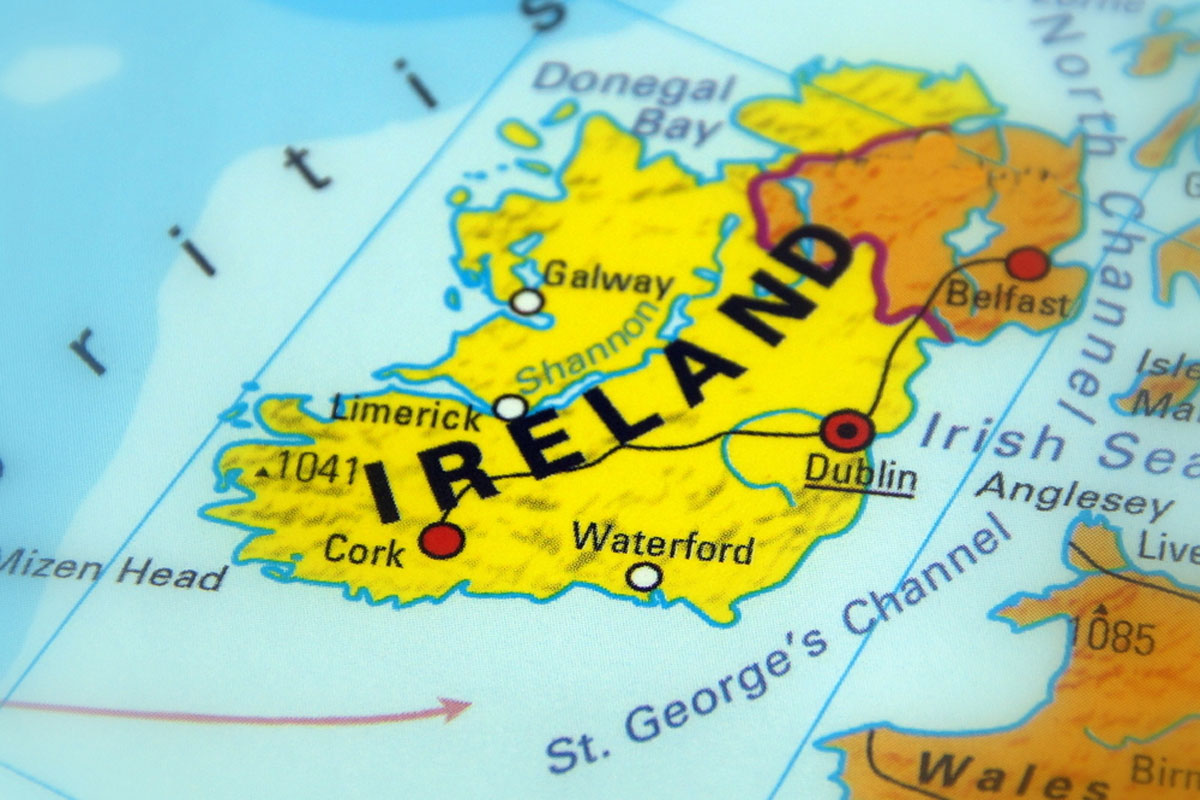
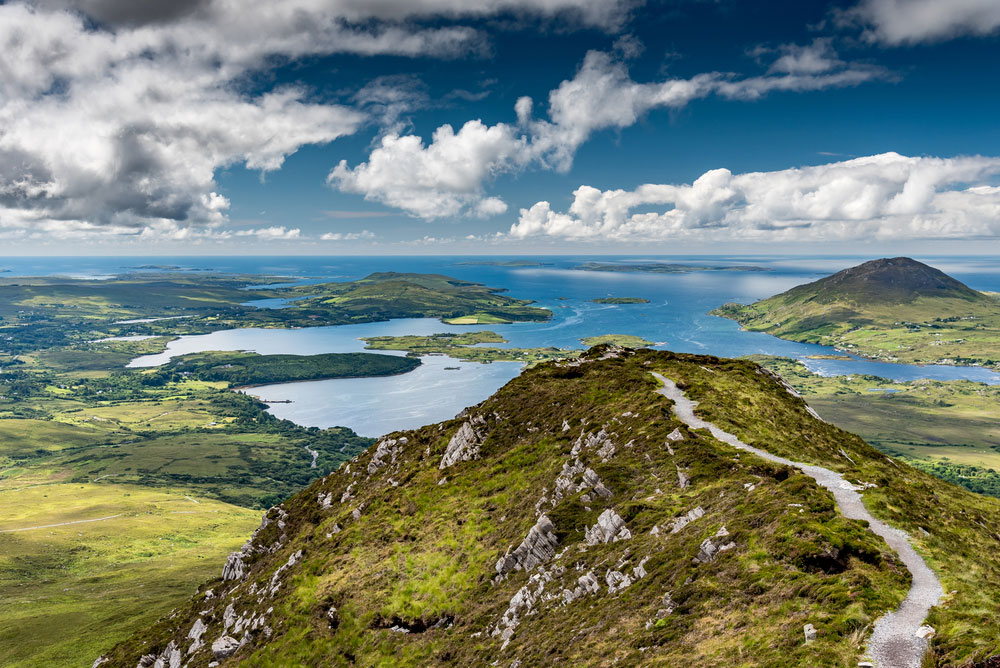
Few places in Ireland feel as ancient, raw, and soul-stirring as the Aran Islands. Sitting at the mouth of Galway Bay, the three islands—Inishmore (Inis Mór), Inishmaan (Inis Meáin), and Inisheer (Inis Oírr)—form one of Ireland’s most treasured Gaeltacht regions. This is a place where the Irish language lives in everyday conversation, where the land is shaped by Atlantic winds, and where tradition holds fast against time.
The islands are famous for their rugged limestone landscapes, endless stone walls, ancient ruins, warm hospitality, and a pace of life that encourages you to slow down and breathe it all in. Although each island has its own character, together they form a cultural and historical tapestry unlike anywhere else in Ireland.
The Three Aran Islands at a Glance
Inishmore (Inis Mór)
The largest and most popular of the three, Inishmore is home to the mighty prehistoric fort Dún Aonghasa, dramatic cliffs, sandy beaches, cycling routes, and the bustling harbour village of Kilronan.
Inishmaan (Inis Meáin)
The quietest and most traditional island, ideal for those seeking solitude, walking routes, cultural immersion, and untouched Irish-speaking communities.
Inisheer (Inis Oírr)
The smallest island, filled with charm—golden beaches, a famous shipwreck, cosy pubs, and nightly traditional music sessions.
While each island offers something special, my own journey revolved around Inishmore, and what I discovered there was far more than just a scenic day trip. It was a powerful encounter with Ireland’s wild beauty and ancient soul.
Arriving on Inishmore: First Impressions of Island Life
The ferry crossing from Rossaveal or Doolin is the perfect introduction to an Aran Island adventure. As the mainland fades behind you, the horizon stretches wide, and the sea takes on that deep Atlantic blue. Approaching Inishmore, the island reveals itself gradually—stone walls, grassy patches, limestone surfaces, and waves crashing against black rock.
Stepping onto the pier at Kilronan, I felt like I had entered a different rhythm of life. Horses pulling carts trotted past, locals greeted each other in Irish, and the sound of bicycles clicking down narrow roads filled the air. Everything was simple, quiet, and wonderfully unhurried.
Kilronan – The Heart of the Island
Kilronan is the main settlement on Inishmore, and it feels like the island’s living room. It’s where ferries dock, markets take place, bikes are rented, and visitors naturally gather.
Strolling through the market area, I found:
- Traditional Aran sweaters in classic cable-knit patterns
- Handmade jewellery crafted from Connemara marble and silver
- Fresh cheeses, seafood, and island-made produce
- Locally made soaps, candles, and woven goods
More than the goods, it was the people who stood out. Islanders chatted easily across stalls, offered travel tips, and welcomed visitors warmly. That friendliness, rooted in community, set the tone for the rest of my trip.
A Quiet Pause in a Local Café
I ordered tea and scones in a small café overlooking the harbour. Through the window, I watched boats unload, children cycle past wearing bright rain jackets, and elderly men laughing together at a table outside. It was the kind of simple, grounded moment that made the island feel instantly familiar—even for a first-time visitor.
Dún Aonghasa: Walking Into Ireland’s Ancient Past
If the Aran Islands have one iconic landmark, it is the monumental cliff-top fort of Dún Aonghasa. Renting a bike in Kilronan, I followed the coastal road toward the fort, passing stone walls, grazing horses, and occasional glimpses of the ocean rolling in.
The climb from the visitor centre to the fort is steep but short. As I made my way upward, the wind grew stronger and the views expanded with every step.
The Cliff-Top Stronghold
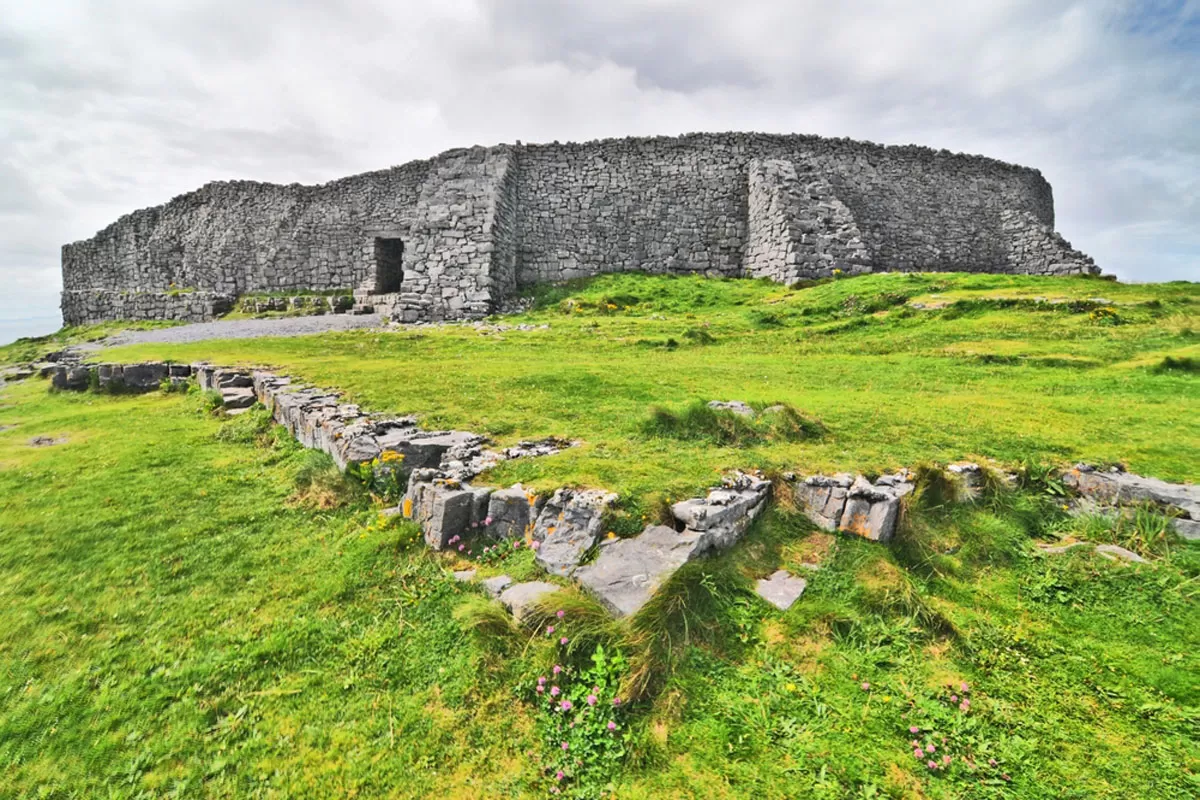
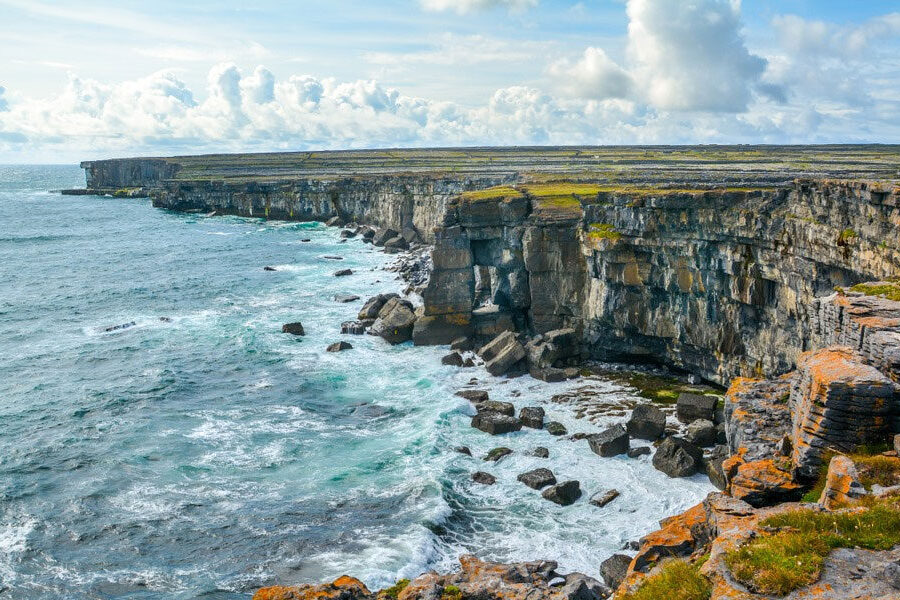
Dún Aonghasa appears suddenly—massive dry-stone walls curving in a semi-circle around an empty grassy space that ends in a sheer 100-metre drop to the Atlantic Ocean. The scale is astonishing, especially when you consider it was built over 3,000 years ago.
Standing on the cliff edge (with no railings), I felt the raw force of the Atlantic pounding against the rocks below. The wind, the height, and the vastness of the sea combined to create a feeling that was both humbling and exhilarating.
A Place Where Time Stands Still
I wandered through the ruins imagining ancient life here—fires burning at night, warriors keeping watch, families huddled inside the thick walls. The fort is not just a monument; it’s a window into Ireland’s prehistoric past.
By the time I descended the hill, I understood why Dún Aonghasa is considered one of the most extraordinary archaeological sites in Europe. It isn’t just a place you see; it’s a place you feel.
Cycling Inishmore: Hidden Beaches, Seals, and Stone Walls
With several hours left in the day, I continued exploring Inishmore by bike—without an agenda, just curiosity guiding the journey. The island’s quiet roads, fresh Atlantic air, and natural beauty made cycling feel effortless.
The Wormhole (Poll na bPéist)
One of the island’s most fascinating geological wonders is the Wormhole—a perfectly rectangular tidal pool carved naturally into the limestone. It looks man-made, but nature did the work over thousands of years. Reaching it requires crossing uneven rock slabs, but the view is worth every step.
Kilmurvey Beach
This stunning sandy beach is one of the most peaceful places on the island. The water is remarkably clear, and on a sunny day it glows turquoise. It’s perfect for a rest, a snack, or simply breathing in the sea air.
The Seal Colony
Further along the coast is the island’s seal colony, best seen at low tide. I sat for a long time watching the seals stretch, roll, and splash into the water—an unexpectedly calming and delightful experience.
Hidden Coves and Secret Corners
Some of my favourite discoveries were places without names—tiny coves accessed by trails between stone walls, secluded beaches with soft sand, and quiet spots where the only sound was the sea. These small moments were as memorable as the major landmarks.
Evenings on Inishmore: Music, Guinness, and Practical Tips
As evening approached, I made my way back to Kilronan. The sun dipped low over the harbour, casting warm light across the village. Island life shifted once more—fishermen heading home, families gathering for dinner, and pubs filling with a comforting buzz.
A Night of Traditional Irish Music
I settled into one of the island’s cosy pubs, ordered a pint of Guinness, and waited to see what the evening would bring. Soon, musicians arrived carrying fiddles, flutes, and a bodhrán. Without any formal announcement, they began to play.
The music was lively, natural, and deeply rooted in island tradition. It wasn’t a performance for tourists—it was the island speaking through sound. The warmth of the fire, the rise and fall of the melodies, and the sense of belonging made it one of the highlights of my trip.
Where Past Meets Present
What stayed with me most was how deeply connected these islands are to their past. Ancient forts, stone walls, and Irish-speaking communities coexist effortlessly with modern life. The Aran Islands are living history—alive, vibrant, and utterly real.
Practical Tips for Visiting the Aran Islands
- Getting there: Ferries run from Doolin (Co. Clare) and Rossaveal (Co. Galway). Book in advance during summer.
- Getting around: Rent a bike in Kilronan for the best experience.
- Bring: Waterproof jacket, sturdy shoes, cash, snacks, and a phone charger.
- Must-see highlights: Dún Aonghasa, the Wormhole, Kilmurvey Beach, the seal colony, and a traditional music session.
- Stay overnight: The island is magical at sunset and sunrise—well worth extending your trip.
If you’re looking for a journey that blends adventure, culture, history, and heartfelt hospitality, an Aran Island adventure is waiting to be discovered.