

When most travelers plan a trip to Ireland, they often focus on the country’s best-known destinations. Counties such as Kerry, Galway, Cork, Clare, and Dublin frequently appear at the top of travel itineraries, attracting visitors with their famous landmarks and stunning scenery.
Yet some of Ireland’s most rewarding experiences can be found beyond the usual tourist trail. Across the four provinces, there are counties that receive far less attention than they deserve despite offering beautiful landscapes, fascinating history, welcoming communities, and unique attractions.
If you’re looking to discover a quieter side of Ireland, these four counties deserve a closer look.
Table of Contents
- Ulster: Monaghan
- Connacht: Leitrim
- Leinster: Offaly
- Munster: Tipperary
- Why Ireland’s Underrated Counties Matter
Ulster: Monaghan
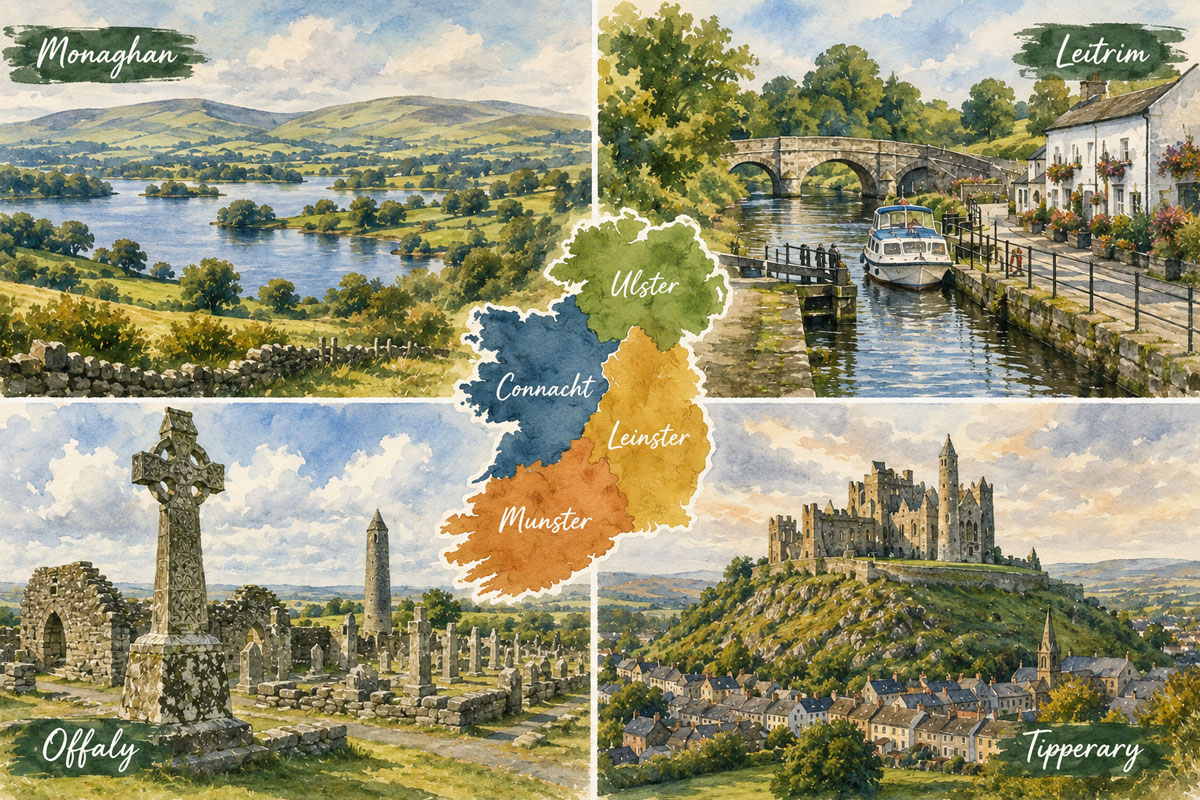
When people think of Ulster, destinations such as Donegal, Belfast, and the Causeway Coast usually come to mind. As a result, County Monaghan is often overlooked entirely, despite offering some of Ireland’s most peaceful countryside.
Known for its rolling drumlin landscape, Monaghan is a county of gentle hills, lakes, and quiet roads. The scenery lacks the dramatic cliffs of Donegal, but it possesses a charm all its own. Visitors will find a landscape shaped by thousands of small rounded hills, creating a patchwork of fields that stretches across the countryside.
One of Monaghan’s best-known attractions is Castle Leslie Estate, a historic country estate surrounded by lakes and woodland. The county also offers excellent cycling routes, fishing opportunities, and walking trails.
What makes Monaghan truly special is its lack of crowds. Visitors can explore historic towns, scenic backroads, and lakeside landscapes without feeling rushed or surrounded by tour buses. For travelers seeking a slower pace, Monaghan delivers an authentic Irish experience that often surprises those who discover it.
Connacht: Leitrim
Leitrim is frequently described as Ireland’s hidden county. Despite its beautiful landscapes and friendly communities, it remains one of the least-visited counties in the country.
The county’s greatest attraction is its tranquility. Leitrim is a place of forests, lakes, rivers, and quiet mountain scenery. It lacks the large tourist centers found elsewhere, but that is precisely what many visitors find appealing.
The Shannon-Erne Waterway passes through the county, attracting boaters and nature lovers. The surrounding countryside provides opportunities for walking, cycling, kayaking, and wildlife watching.
Small towns and villages retain a strong sense of local identity, and visitors often remark on the warm welcome they receive. Rather than offering one major attraction, Leitrim’s appeal comes from its atmosphere—a chance to experience Ireland without crowds.
For travelers looking to escape busy itineraries and enjoy a slower pace of exploration, Leitrim is difficult to beat.
Leinster: Offaly
Located in the heart of Ireland, Offaly is often bypassed by travelers heading between Dublin and the west coast. Yet the county contains some of the country’s most significant historical sites and unique landscapes.
Perhaps its most famous attraction is Clonmacnoise, one of Ireland’s most important early Christian settlements. Founded in the 6th century on the banks of the River Shannon, the site features ancient churches, high crosses, round towers, and centuries of Irish history.
Offaly is also known for the boglands of the Irish Midlands. While bogs may not sound exciting at first, they represent an important part of Ireland’s natural and cultural heritage. Restoration projects have transformed many former peatlands into valuable wildlife habitats and visitor attractions.
Another highlight is Birr Castle Demesne, home to beautiful gardens and the famous Great Telescope, which was once the largest telescope in the world.
Offaly may not have Ireland’s most famous scenery, but it offers a fascinating blend of history, nature, and heritage that many visitors never expect.
Munster: Tipperary
Overshadowed by neighboring Kerry, Cork, and Clare, County Tipperary is often one of the most underrated destinations in Munster.
The county is home to some of Ireland’s most impressive historic sites. The Rock of Cashel rises dramatically above the surrounding countryside and remains one of the country’s most iconic landmarks. Nearby Cahir Castle is among the best-preserved medieval castles in Ireland and offers a fascinating glimpse into the past.
Beyond its history, Tipperary boasts remarkable natural beauty. The Glen of Aherlow stretches between the Galtee Mountains and Slievenamuck Ridge, offering scenic drives, hiking trails, and spectacular views.
Lough Derg provides opportunities for boating, fishing, and waterside relaxation, while the county’s villages and market towns retain a welcoming atmosphere.
Tipperary combines many of the qualities visitors seek in Ireland—history, scenery, outdoor activities, and authentic local culture—yet often receives only a fraction of the attention given to neighboring counties.
Why Ireland’s Underrated Counties Matter
Part of the joy of exploring Ireland lies in discovering places that are not always featured on the front page of travel brochures. While famous destinations deserve their popularity, some of the country’s most memorable experiences occur in quieter regions where tourism has not overwhelmed local character.
Counties such as Monaghan, Leitrim, Offaly, and Tipperary offer visitors a chance to experience a different side of Ireland. They provide beautiful landscapes, fascinating history, and genuine hospitality without the crowds often found at more famous attractions.
Travelers willing to venture beyond the obvious destinations are often rewarded with unexpected discoveries and memorable encounters. These counties remind us that Ireland’s greatest treasures are not always the ones that receive the most attention.
Sometimes the most rewarding journey begins by taking a road that others overlook.
These counties may be overlooked, but each reflects the character of its province. To better understand Ireland’s regions and their distinct identities, read our guide to the Four Provinces of Ireland.