



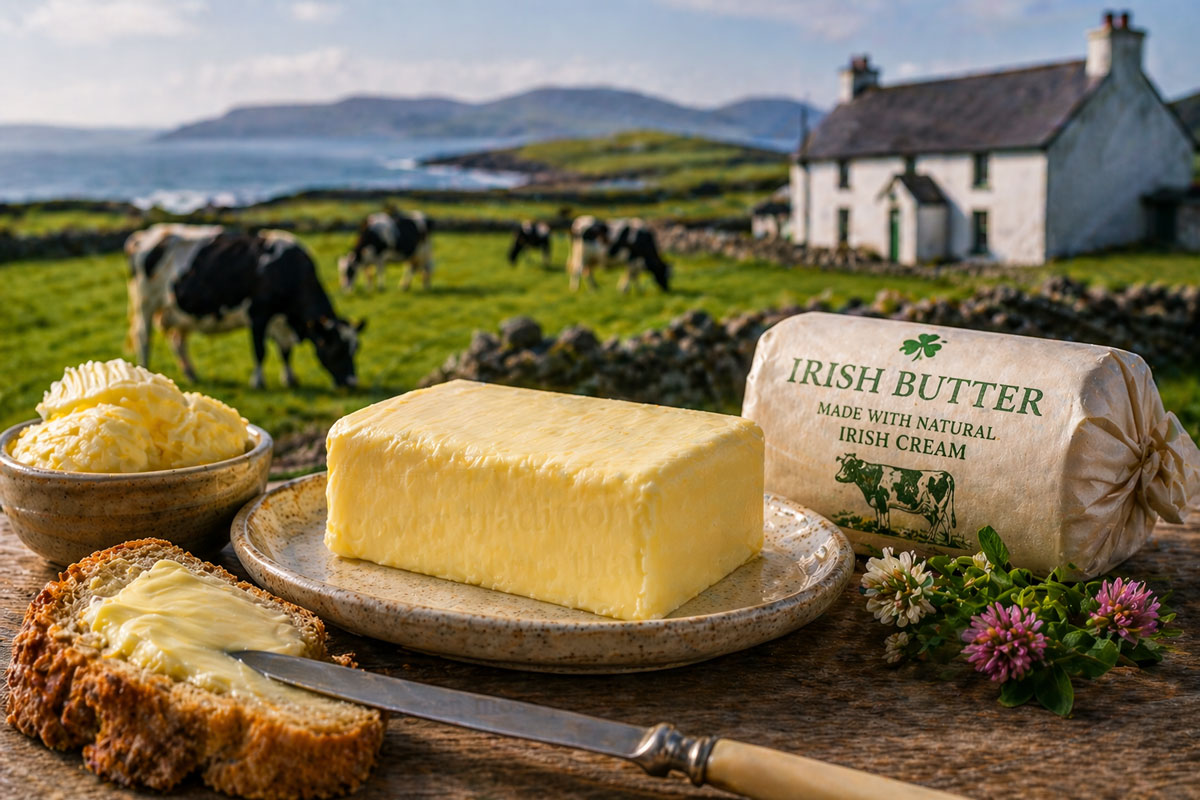
If you’ve ever spread Irish butter on warm bread, you’ve likely noticed something immediately—it tastes richer, creamier, and more flavorful than many other butters. Its deep golden color and smooth texture set it apart, making it a favorite not just in Ireland but around the world.
But what exactly makes Irish butter taste different? The answer lies in a combination of Ireland’s landscape, farming traditions, and the way the butter itself is produced.
Let’s explore why Irish butter stands out—and where its unique flavor truly comes from.
Table of Contents
- Grass-Fed Cows and Ireland’s Green Landscape
- A Climate Perfect for Dairy Farming
- Higher Butterfat Content
- Traditional and Modern Production Methods
- Why Irish Butter Is So Yellow
Grass-Fed Cows and Ireland’s Green Landscape
The biggest reason Irish butter tastes different begins with what the cows eat. In Ireland, dairy cows are primarily grass-fed, grazing on lush pastures for much of the year.
Ireland’s countryside is famously green for a reason. Frequent rainfall and mild temperatures create ideal conditions for growing nutrient-rich grass. This diet has a direct impact on the milk produced by the cows—and ultimately on the butter made from it.
Grass-fed milk tends to have a richer, more complex flavor compared to milk from grain-fed cows. It also contains higher levels of certain nutrients, which contribute to the distinctive taste and texture of Irish butter.
In contrast, in many other countries, dairy cows are often fed a diet that includes grains or silage for much of the year. While this approach supports large-scale production, it can result in a more neutral-tasting butter.
A Climate Perfect for Dairy Farming
Ireland’s climate plays a crucial role in shaping its dairy products. The country’s mild, temperate weather allows grass to grow for a longer season than in many other regions.
With no extreme heat or cold, cows can graze outdoors for most of the year. This consistent access to fresh pasture helps maintain the quality and flavor of the milk.
The steady rhythm of Ireland’s seasons also supports traditional farming practices. Many Irish dairy farms are family-run, with methods passed down through generations.
This combination of climate and tradition creates a foundation for high-quality dairy products, including butter that reflects the natural environment it comes from.
Higher Butterfat Content
Another key difference is butterfat content. Irish butter typically contains a higher percentage of butterfat than standard butter in many countries.
While some butters contain around 80% butterfat, Irish butter often ranges closer to 82% or higher. This may seem like a small difference, but it has a noticeable impact on flavor and texture.
Higher butterfat results in a creamier consistency and a richer taste. It also makes Irish butter ideal for baking, as it contributes to flakier pastries and more tender textures.
For everyday use, this higher fat content creates a smoother, more luxurious mouthfeel that many people immediately recognize.
Traditional and Modern Production Methods
Irish butter production blends tradition with modern techniques. While large-scale production exists, many methods still reflect long-standing practices in dairy farming.
After milk is collected, it is separated to produce cream. This cream is then churned to form butter, a process that has remained largely unchanged over time.
Some Irish butters are cultured, meaning the cream is allowed to ferment slightly before churning. This adds a subtle tang and depth of flavor.
Even in modern facilities, there is a strong emphasis on quality and consistency. Ireland’s dairy industry is known for strict standards, ensuring that the butter maintains its distinctive taste regardless of where it is produced.
Why Irish Butter Is So Yellow
One of the most noticeable features of Irish butter is its rich golden color. This comes naturally from the cows’ grass-based diet.
Grass contains beta-carotene, a natural pigment also found in carrots. When cows consume large amounts of fresh grass, this pigment transfers into the milk and cream, giving the butter its characteristic yellow hue.
In contrast, butter from grain-fed cows is often much paler and may even appear almost white. In some regions, coloring is added to butter to achieve a more appealing look—but Irish butter’s color is entirely natural.
The vibrant color is often seen as a visual sign of quality, reflecting the freshness and richness of the milk used to produce it.
From Irish Fields to Your Table
Irish butter is more than just a dairy product—it’s a reflection of Ireland’s landscape and farming heritage. From the grass-fed cows grazing in open pastures to the careful production methods used in dairies, every step contributes to its distinctive taste.
Whether spread on bread, melted over vegetables, or used in baking, Irish butter brings a depth of flavor that connects directly back to the land it comes from.
For those exploring Irish food culture, it’s one of the simplest—and most delicious—ways to experience the difference that place can make.