

For many visitors, Ireland feels like a place that demands a car. Narrow roads, scattered villages, and remote landscapes seem to suggest that driving is the only way to explore properly. Yet spending time in rural Ireland without a car can reveal a very different side of the country—one that is slower, more personal, and often more rewarding.
A week without a car changes how you move through Ireland. Distances feel different, conversations last longer, and the landscape is experienced at a human pace. Rather than rushing between highlights, you begin to notice everyday rhythms, quiet moments, and the subtle ways rural life unfolds.
Table of Contents
- Slowing Down in a Land Built for Walking
- Public Transport, Local Links, and Patience
- Village Life and Everyday Encounters
- Seeing the Landscape Differently
- Is Rural Ireland Without a Car Right for You?
Slowing Down in a Land Built for Walking
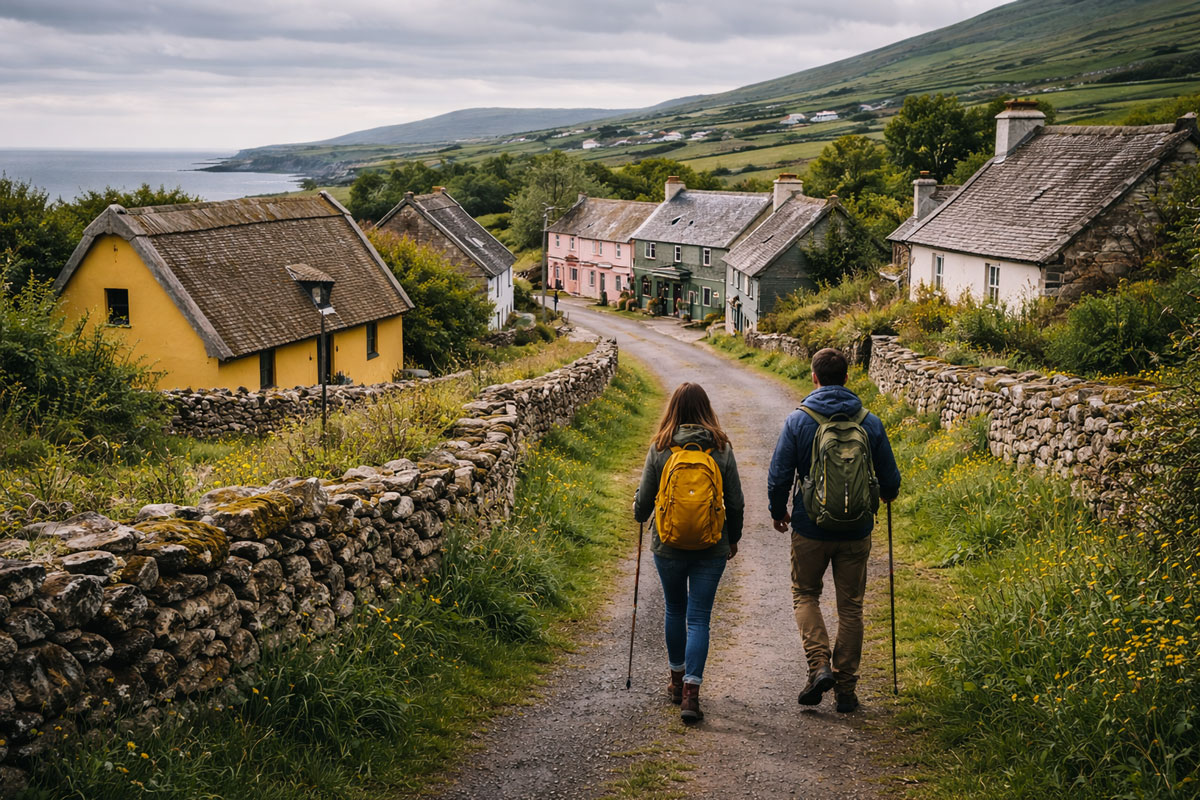
Rural Ireland was shaped long before modern transport. Paths between fields, villages, churches, and rivers were designed for feet rather than wheels, and many of these routes still form the backbone of daily movement. Without a car, walking becomes the primary way of understanding place.
Short distances take on new meaning. A walk to the local shop becomes part of the day rather than a quick errand. Roads curve gently, hedgerows close in, and the sound of traffic fades away. You begin to recognise landmarks not by road signs, but by trees, gates, bends, and changes in the land.
This slower pace encourages observation. You notice the rhythm of farming life, the timing of school buses, the way neighbours greet one another in passing. In rural Ireland, walking reconnects you to the land and its people in a way driving rarely does.
Public Transport, Local Links, and Patience
Public transport in rural Ireland exists, but it operates on its own terms. Buses are less frequent, routes can be indirect, and timetables require flexibility. Learning to move without a car means accepting that travel may take longer and that plans may change.
Local Link services, regional buses, and rural routes connect villages and small towns to larger hubs. These services are often used by locals rather than tourists, creating opportunities for conversation and shared experience. Journeys become social as well as practical.
Patience becomes part of the rhythm. Waiting at a quiet bus stop, adjusting plans to suit weather or schedules, or choosing to stay an extra day because connections are limited becomes normal. Rather than feeling restrictive, this slower rhythm often feels liberating, removing the pressure to constantly move on.
Without a car, you begin to plan around place rather than distance. You choose accommodation carefully, think about what is within walking reach, and accept that not everything needs to be seen in a single trip.
Village Life and Everyday Encounters
Without a car, rural village life opens up in subtle but meaningful ways. You spend more time in fewer places, allowing routines to form. The same faces appear at the shop, café, post office, or pub, and conversations begin naturally.
Locals are often curious and welcoming, particularly when they realise you are staying nearby rather than passing through. Directions are given with stories attached, and recommendations come from lived experience rather than guidebooks.
Daily life becomes part of the experience. You learn shop opening hours, notice delivery days, and begin to recognise the quiet patterns that shape village life. These small details give a sense of belonging that short visits rarely achieve.
These everyday encounters often become the most memorable moments of the week. A shared bench, a casual chat over tea, or a familiar greeting can leave a deeper impression than any headline attraction.
Seeing the Landscape Differently
Moving through rural Ireland without a car changes how the landscape feels. Hills are climbed gradually rather than driven over. Fields are passed at walking pace, and coastal paths unfold slowly, revealing views piece by piece.
The land feels more intimate. Weather becomes a companion rather than an inconvenience, shaping daily decisions and moods. Rain, mist, wind, and light are experienced directly, encouraging flexibility and awareness.
You begin to appreciate the spaces between destinations: quiet lanes, empty fields, stretches of road where nothing happens at all. These moments of stillness are central to understanding rural Ireland, where the journey itself is often the reward.
This way of travel reveals the quiet beauty of the countryside—the silence of back roads, the sound of birds and water, and the sense that the land is not something to be conquered, but lived alongside.
Is Rural Ireland Without a Car Right for You?
A week without a car in rural Ireland is not about efficiency or covering ground. It is about depth rather than breadth, presence rather than pace. This style of travel suits those who value time, conversation, and atmosphere over packed itineraries.
It may not suit travellers with tight schedules or long lists of must-see attractions. Limited transport options and slower movement require patience and adaptability. Yet for those willing to accept these limits, the rewards are significant.
By the end of the week, distances feel shorter, days feel fuller, and Ireland feels less like a destination and more like a place lived in. The absence of a car shifts attention away from routes and timetables and toward people, place, and moment.
Sometimes, the best way to understand rural Ireland is not to drive through it, but to stay still long enough to let it reveal itself.