



Table of Contents
- Introduction: The Ruined Heart of Medieval Kerry
- The History of Ardfert Cathedral
- Architectural Features: Gothic Windows and Medieval Carvings
- Visiting Ardfert Cathedral Today
- Ardfert’s Legacy in Irish Heritage
Introduction: The Ruined Heart of Medieval Kerry
On the outskirts of Tralee in County Kerry, the atmospheric ruins of Ardfert Cathedral stand as a striking reminder of Ireland’s medieval faith and artistry. Once the spiritual centre of the diocese of Ardfert, the cathedral now lies roofless, its towering stone walls pierced by dramatic Gothic windows that frame the Kerry sky. Despite centuries of decline, the site retains a sense of majesty that captivates visitors and historians alike.
Ardfert Cathedral was founded in the 12th century, during a period when the Irish church was undergoing major reform and consolidation. The location itself was already steeped in history, associated with St. Brendan the Navigator, one of Ireland’s most legendary saints, who is believed to have been born nearby. Over time, the cathedral complex grew to include smaller churches, chapels, and monastic buildings, turning Ardfert into an important religious hub for the region.
Today, what remains are powerful stone shells that speak eloquently of both grandeur and ruin. The soaring lancet windows, intricate medieval carvings, and solid walls that have withstood centuries of weather offer a glimpse into the craftsmanship and devotion that once flourished here. The site is managed as a national monument, with preservation efforts ensuring that the cathedral continues to inspire awe and reflection.
For visitors exploring County Kerry, Ardfert Cathedral offers a different kind of beauty than the region’s dramatic mountains or coastal drives. It is a place where history feels tangible, where the silence of the ruins evokes stories of monks, pilgrims, and medieval congregations.
The History of Ardfert Cathedral
The story of Ardfert Cathedral stretches back to the early medieval era and is closely tied to the legacy of St. Brendan the Navigator, one of Ireland’s most celebrated saints. Born near Ardfert in the 6th century, Brendan became famous for his legendary voyages across the Atlantic, inspiring generations of pilgrims and storytellers. By the 12th century, when church reforms reshaped Ireland’s ecclesiastical structure, Ardfert was chosen as the seat of a diocese, and construction of the great cathedral began.
Built in the late 1100s, the cathedral was at first a relatively simple Romanesque structure, later expanded with Gothic additions in the 13th and 14th centuries. It became the central church of the Diocese of Ardfert, overseeing a network of parishes across north Kerry. Alongside the main building, smaller churches and chapels were constructed on the site, creating a vibrant religious complex that reflected the wealth and influence of the medieval church.
Like many Irish cathedrals, Ardfert endured turbulent centuries. In the 16th century, the cathedral was damaged during the Dissolution of the Monasteries, when Henry VIII broke from Rome and monastic lands and properties were seized. The building survived in use for a time but was devastated once again during the Irish Confederate Wars of the 1640s, when Cromwellian forces burned much of the structure. From then on, Ardfert Cathedral fell into ruin, with its diocese eventually absorbed into that of Limerick and Ardfert.
Despite its decline, the cathedral retained symbolic importance. Local communities continued to bury their dead within the site, and the surrounding chapels remained in occasional use for worship. In the 19th and 20th centuries, antiquarians and preservationists recognized its historical value, leading to conservation measures that stabilized the ruins and opened them to visitors as part of Ireland’s protected heritage.
Today, the history of Ardfert Cathedral is visible in every stone—the Romanesque beginnings, the Gothic flourishes, the scars of conflict, and the quiet resilience of a sacred site that refused to vanish. Its story mirrors Ireland’s broader religious and political struggles, making it not only an architectural treasure but also a living chronicle of the nation’s past.
Architectural Features: Gothic Windows and Medieval Carvings
Even in ruin, Ardfert Cathedral commands attention with its impressive architectural details. The surviving stonework reveals the craftsmanship and artistry that went into its construction over several centuries. Walking through the site, visitors encounter soaring Gothic windows, finely carved stonework, and remnants of medieval chapels that illustrate the changing styles of Irish ecclesiastical architecture.
The most striking feature is the series of tall Gothic lancet windows that rise above the east gable. These elegant, narrow openings frame the sky, creating dramatic silhouettes that change with the light of day. Once filled with stained glass, they would have flooded the interior with color and light, transforming the cathedral into a place of awe and inspiration for medieval worshippers. Even without their glazing, the windows remain breathtaking, a testament to Gothic design and spiritual symbolism.
Romanesque elements also survive, especially in the smaller doorways and arches. Their rounded forms contrast with the pointed Gothic windows, showing how the cathedral evolved over time. The transition from Romanesque solidity to Gothic verticality is written directly into the walls, making Ardfert a textbook example of medieval architectural development in Ireland.
Scattered throughout the site are medieval carvings that reward closer inspection. Stone heads, floral motifs, and decorative moldings adorn arches and windows, hinting at the skills of the stonemasons who worked here. In one chapel, visitors can still see intricate tracery and sculpted details that suggest both artistry and devotion. These carvings, though weathered by centuries of wind and rain, continue to convey the cathedral’s former beauty.
The complex also includes two smaller churches: Temple na Griffin and Temple na Hoe, each with its own distinctive features. Temple na Hoe in particular preserves fine medieval windows, while Temple na Griffin contains stone effigies and fragments that add further depth to the site’s architectural story. Together with the main cathedral, they form an ensemble that speaks to the religious and cultural vitality of Ardfert in the Middle Ages.
For today’s visitors, the architecture of Ardfert Cathedral is not just about ruins—it is about imagination. Standing among the Gothic arches and carvings, one can picture the building in its prime: a vibrant centre of worship, filled with color, sound, and ceremony. Even in silence, the stones still speak.
Visiting Ardfert Cathedral Today
For modern travelers exploring County Kerry, a visit to Ardfert Cathedral offers an unforgettable glimpse into Ireland’s medieval heritage. Situated just 8 kilometers from Tralee, the site is easily accessible by car, bike, or local transport, making it a convenient stop for those touring the Dingle Peninsula or the wider Wild Atlantic Way. Managed by the Office of Public Works (OPW), the cathedral and its adjoining churches are preserved as a national monument and open to visitors year-round.
The cathedral stands in the heart of the village of Ardfert, where the ruins rise dramatically above the surrounding streets. Visitors can walk freely among the walls, chapels, and graveyards, taking in the scale and atmosphere of the medieval complex. Informational panels around the site help explain the history, architecture, and significance of the buildings, while guided tours are sometimes available during the summer months for those who want a deeper understanding.
The village itself provides a welcoming backdrop to the visit. Cafés, pubs, and local shops allow travelers to enjoy a meal or refreshment after exploring the ruins, while nearby beaches such as Banna Strand offer the chance to combine cultural sightseeing with a walk along one of Kerry’s most famous stretches of sand. This makes Ardfert Cathedral not only a historical highlight but also part of a well-rounded day trip experience.
Practical tips for visiting include wearing comfortable shoes, as the ground around the ruins can be uneven, and bringing a camera to capture the striking Gothic windows and atmospheric stonework. Admission is free, but visitors are encouraged to respect the site by avoiding climbing on walls or disturbing gravestones, as this is still a sacred place with burials dating back centuries.
For those with an interest in Irish history, Ardfert Cathedral pairs well with nearby sites such as Rattoo Round Tower and Tralee’s medieval heritage trail. Whether you spend an hour wandering the ruins or half a day exploring the wider area, Ardfert offers both tranquility and inspiration, blending the solemnity of the past with the hospitality of present-day Kerry.
Ardfert’s Legacy in Irish Heritage
Although Ardfert Cathedral stands today as a ruin, its legacy in Irish history and culture is profound. The cathedral was once the spiritual heart of a thriving diocese, a centre of worship and learning that shaped the religious identity of north Kerry for centuries. Even after its decline in the 17th century, the site remained a powerful symbol of endurance, faith, and community memory.
The cathedral’s connection to St. Brendan the Navigator ensured its place in Ireland’s wider spiritual story. Brendan’s legendary voyages across the seas linked Ardfert to global horizons, making the village and its cathedral a site of pilgrimage for those inspired by his adventurous spirit. Even in ruin, the association with Brendan adds depth to the visitor experience, reminding us that this quiet corner of Kerry once stood at the crossroads of legend and belief.
In architectural terms, Ardfert has also left its mark. The surviving Gothic windows and medieval carvings are studied by historians as important examples of ecclesiastical art in Ireland. The site’s combination of Romanesque and Gothic features illustrates the evolution of Irish church architecture, making Ardfert a valuable resource for scholars and students as well as curious travelers.
Culturally, Ardfert Cathedral embodies the way Irish ruins often blend tragedy and beauty. Its story of construction, destruction, and preservation reflects Ireland’s wider struggles with conquest, reform, and resilience. Writers, poets, and artists have found inspiration in the cathedral’s dramatic silhouette, which has come to symbolize both loss and continuity in Irish heritage.
Today, Ardfert Cathedral’s legacy lives on through tourism and community pride. As part of Ireland’s national monuments, it draws visitors from across the world who come to walk among its stones and reflect on its history. For the people of Kerry, it remains a landmark of identity, anchoring the village in a story that spans from the age of saints to the modern era. In this way, Ardfert Cathedral continues to fulfill its original role: a place where the human and the spiritual meet, where past and present stand side by side.
Natural Attractions
- Ring of Kerry – A famous scenic drive showcasing rugged coastlines, mountains, and picturesque villages.
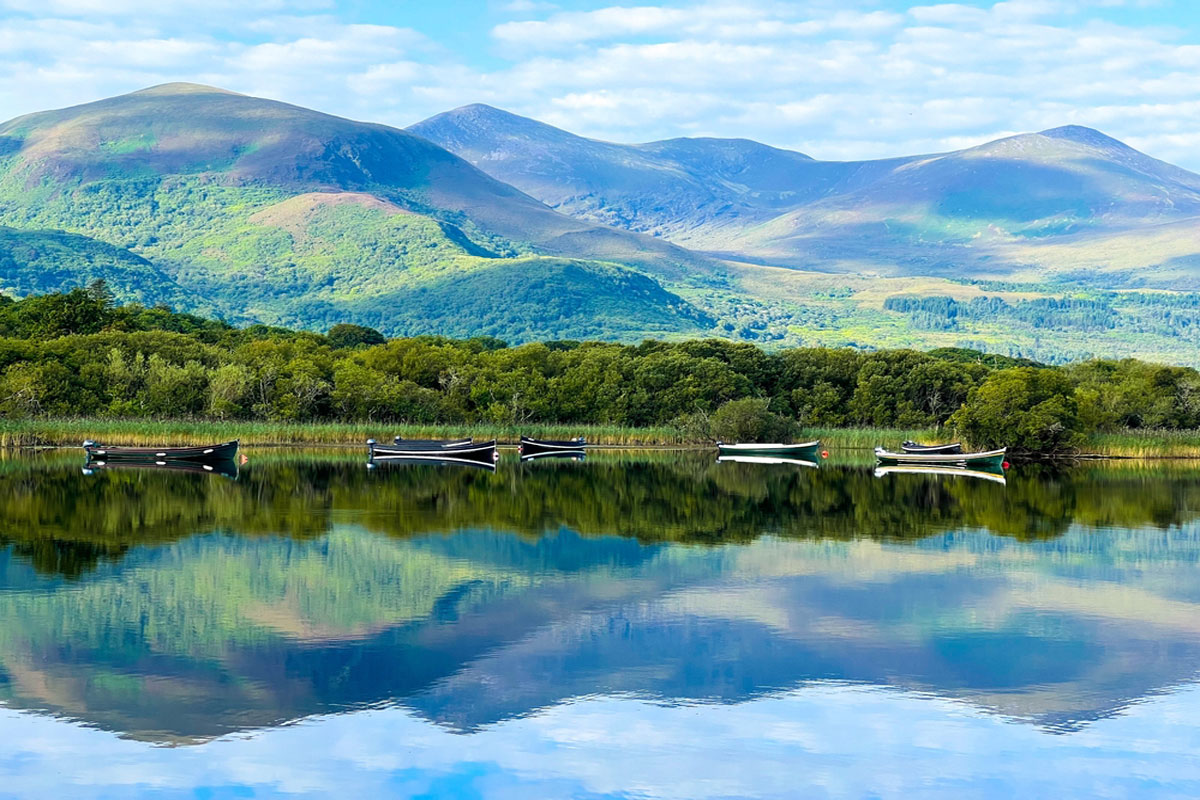
- Killarney National Park – Home to stunning lakes, waterfalls, and the majestic MacGillycuddy’s Reeks.
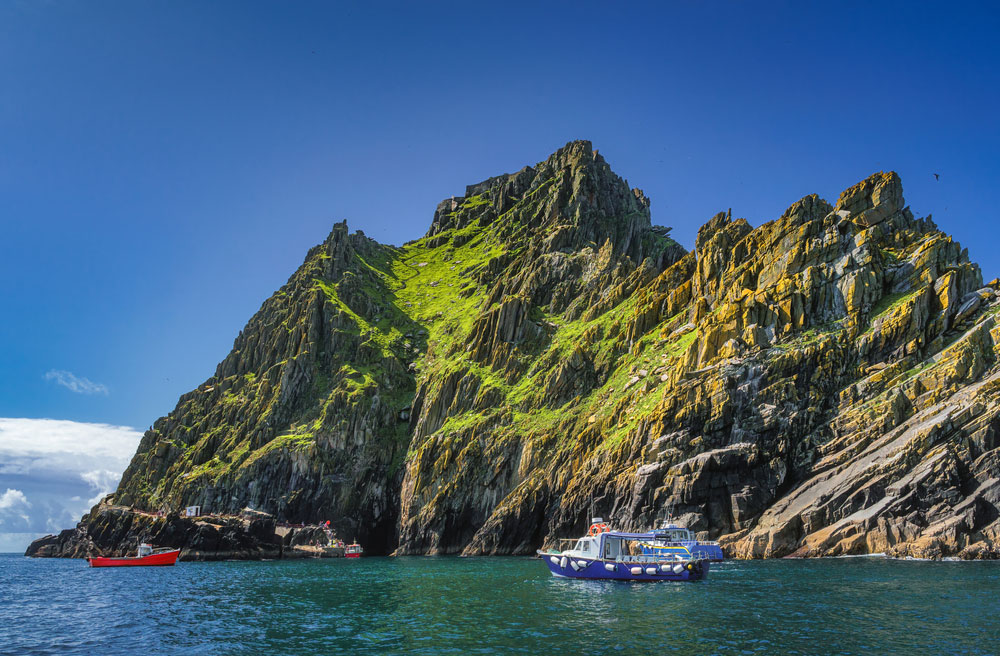
- Skellig Michael – A UNESCO World Heritage Site featuring ancient monastic ruins on a dramatic island.
- Gap of Dunloe – A breathtaking mountain pass, perfect for walking, cycling, or jaunting car tours.
- Torc Waterfall – A beautiful cascade nestled in a lush woodland setting.
Historical and Cultural Sites
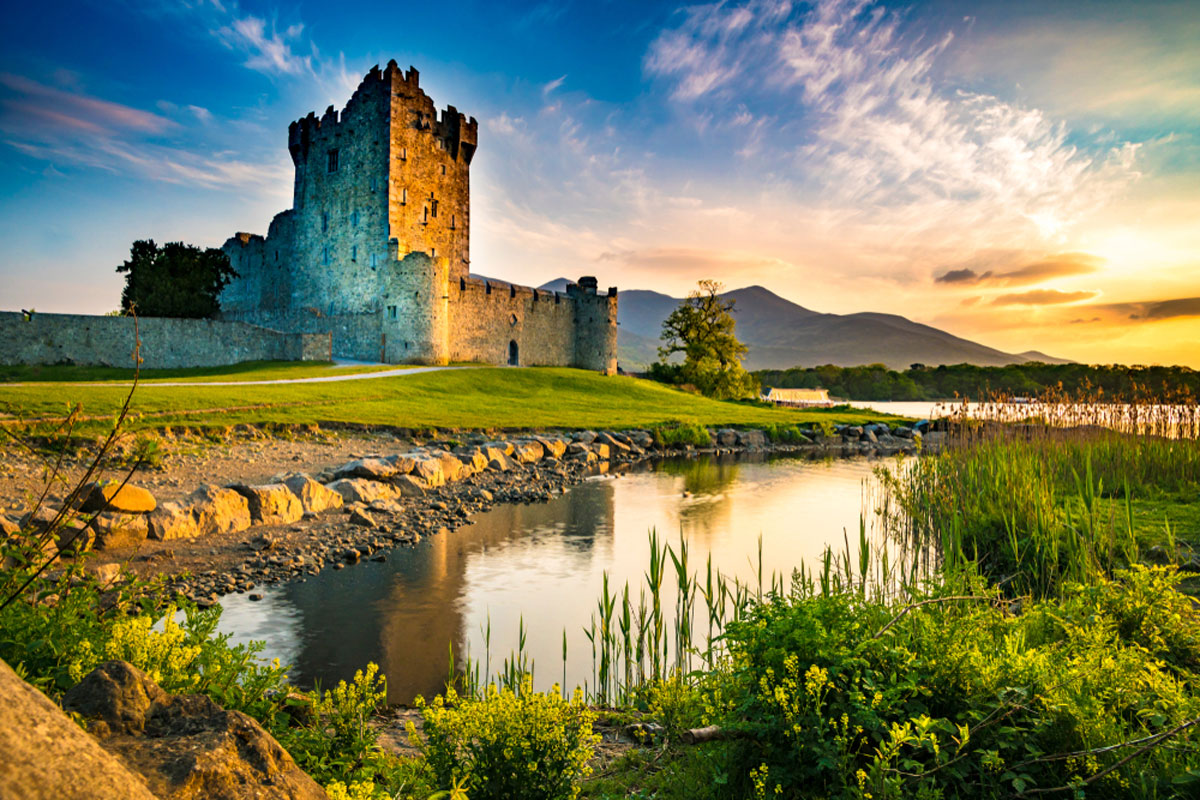
- Ross Castle – A 15th-century castle on the shores of Lough Leane in Killarney.
- Muckross House and Gardens – A Victorian mansion with stunning gardens and a traditional farm.
- Blennerville Windmill – Ireland’s largest working windmill, near Tralee.
- Staigue Fort – A well-preserved ancient stone fort with stunning views.
- Daniel O’Connell’s House – The home of “The Liberator,” a prominent Irish political leader.
Beaches and Coastal Attractions
- Inch Beach – A stunning sandy beach, popular for surfing and long walks.
- Banna Strand – A historic beach linked to the story of Roger Casement and the Easter Rising.
- Rossbeigh Beach – A beautiful stretch of sand with panoramic views of Dingle Bay.
- Ballinskelligs Beach – A Blue Flag beach near the picturesque village of Ballinskelligs.
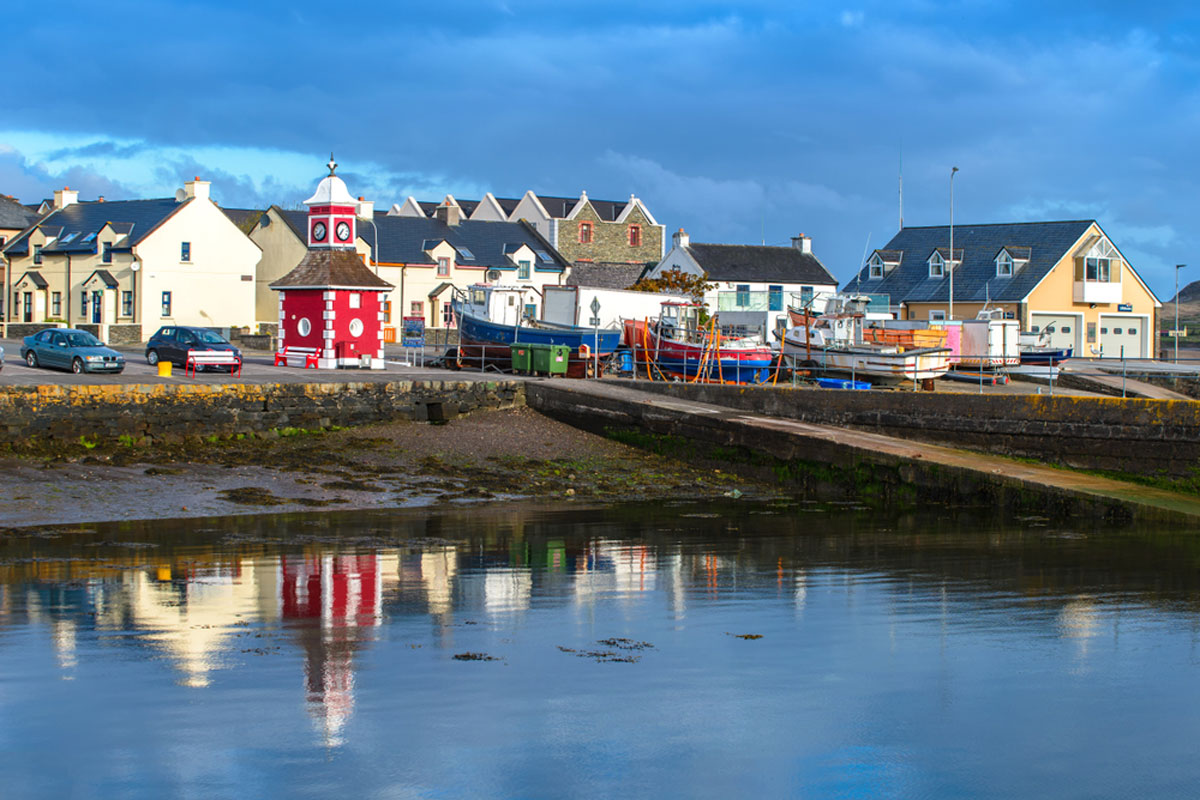
- Fenit Harbour and Beach – A quaint harbour with a sandy beach and water sports.
Scenic Drives and Villages
- Dingle Peninsula – Known for its rugged beauty, charming villages, and archaeological sites.
- Slea Head Drive – A breathtaking loop with dramatic cliffs and coastal views.
- Kenmare – A vibrant town with boutique shops, restaurants, and nearby scenic trails.
- Sneem – A picturesque village on the Ring of Kerry, perfect for relaxing.
- Cahersiveen – A historic town with nearby ancient forts and stunning views.
Unique Experiences
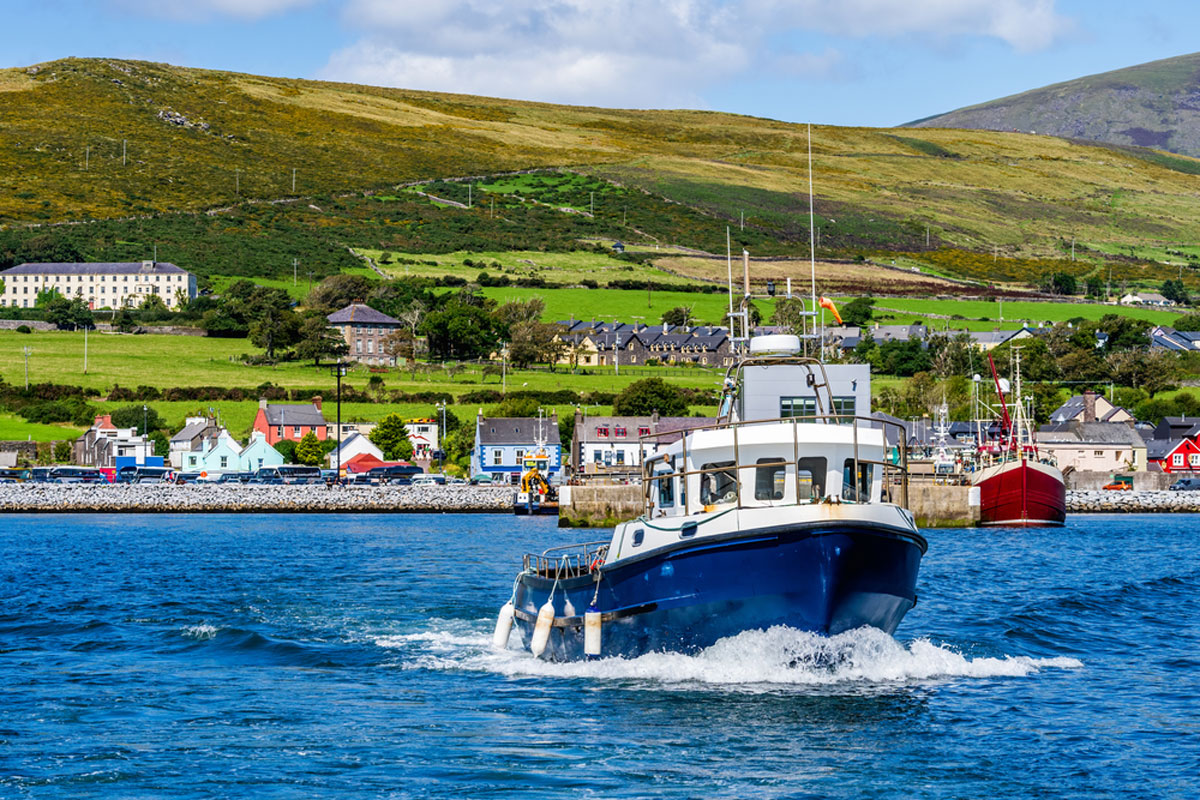
- Dingle Dolphin Boat Tours – Search for Fungie the Dolphin and enjoy the coastal scenery.
- Kerry International Dark Sky Reserve – One of the best places in the world for stargazing.
- Killarney Jaunting Cars – Traditional horse-drawn carriage tours through the national park.
- Skellig Chocolate Factory – Indulge in locally made chocolate with stunning views of Skellig Michael.
- Aqua Dome Tralee – A family-friendly water park with fun for all ages.
County Kerry’s dramatic landscapes, rich history, and vibrant culture make it a must-visit destination in Ireland.
Helpful Resources: