



Table of Contents
- The Legacy of Tintern Abbey: A Cistercian Foundation in Wexford
- From Monks to Nobles: The Colclough Family and the Abbey’s Transformation
- Woodland Walks and Walled Gardens: The Grounds of Tintern Today
- Visiting Tintern Abbey: What to See and Practical Tips
- Tintern Abbey in Irish Cultural Memory and Tourism
The Legacy of Tintern Abbey: A Cistercian Foundation in Wexford
Hidden within the tranquil countryside of County Wexford, Tintern Abbey stands as a hauntingly beautiful relic of medieval faith and architecture. Founded in the early 13th century, this picturesque abbey is one of the most treasured monastic sites in Ireland—not only for its Gothic remains but also for its scenic setting near forested trails and coastal walks.
The abbey’s official name, Tintern de Voto (Tintern of the Vow), points to its legendary origin. According to historical accounts, William Marshal, 1st Earl of Pembroke, vowed to build a monastery should he survive a treacherous sea voyage from Wales. Safely arriving on Irish shores around 1200, he kept his word and established the abbey as a daughter house of the original Tintern Abbey in Monmouthshire, Wales.
The monks who settled here were Cistercians, a reformist order known for their emphasis on simplicity, self-sufficiency, and prayerful labor. Like many Cistercian houses, Tintern was laid out in a functional yet elegant style, with a church, cloister, chapter house, dormitories, and agricultural buildings. The surrounding land was cultivated and managed by lay brothers, creating a flourishing monastic economy that supported both the abbey and the local community.
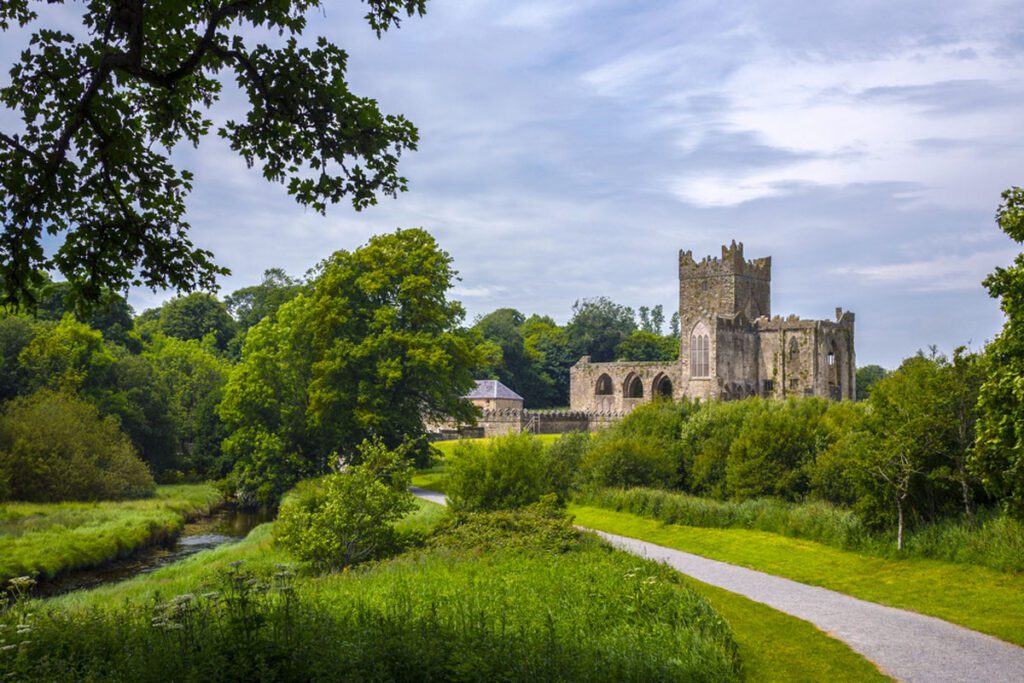
While parts of the original structures have weathered and crumbled over time, visitors today can still appreciate the grandeur of Tintern’s layout. The surviving nave, chancel, and tower evoke the solemn grandeur of medieval ecclesiastical architecture. Arched windows, sturdy buttresses, and aged stonework provide a compelling glimpse into the spiritual and practical lives of its former inhabitants.
Tintern Abbey was not just a religious hub—it was also a center of education, land management, and healthcare in the medieval era. Monks were often literate, maintaining libraries and transcribing manuscripts. Their herbal knowledge was advanced for the time, and monasteries like Tintern served as de facto hospitals for surrounding rural populations.
By the 16th century, however, the abbey’s monastic life came to an end due to the Dissolution of the Monasteries under Henry VIII. Like many religious sites across Ireland and Britain, Tintern was confiscated and its lands redistributed, marking the start of a new chapter in its long and layered history—a chapter shaped by aristocracy, agriculture, and eventual romantic ruin.
Today, Tintern Abbey’s moss-covered stones and open arches stand as a testimony to nearly 800 years of Irish history. Whether you’re drawn by its spiritual roots, its medieval architecture, or the scenic woodland trails that now surround it, Tintern remains one of Ireland’s most atmospheric and serene heritage sites.
From Monks to Nobles: The Colclough Family and the Abbey’s Transformation
Following the Dissolution of the Monasteries in the 16th century, Tintern Abbey experienced a dramatic transformation. No longer a place of prayer and communal monastic life, it was soon repurposed for a new era—one defined by private landownership, political alliances, and aristocratic ambition. At the heart of this transformation was the Colclough family, who would shape the site for generations to come.
In 1575, Sir Anthony Colclough, an English soldier and loyal servant of the Crown, was granted the lands and remains of Tintern Abbey by Queen Elizabeth I. He had served in Ireland under the command of the Lord Deputy and was rewarded for his military service with the former monastic estate. The Colcloughs, originally from Staffordshire, England, quickly established themselves as one of the most prominent Anglo-Irish families in County Wexford.
Instead of abandoning the abbey ruins, the Colcloughs saw an opportunity. They gradually converted parts of the existing stone structures into a private residence. Over the next several centuries, Tintern Abbey would be reshaped into a fortified manor house. New wings were added, domestic spaces were modernized, and defensive features were installed to protect against regional unrest. Yet despite these changes, much of the medieval architecture remained visible, creating a unique blend of religious and residential design.
As landlords, the Colcloughs managed vast agricultural holdings and were closely involved in the affairs of the surrounding communities. They employed locals, built tenant housing, and invested in land drainage and forestry. Their presence helped define the social and economic character of the region for over 350 years.
While the Colcloughs rose in prominence, their fortunes also reflected the shifting tides of Irish and British history. The family navigated the turbulent periods of the Cromwellian conquest, the Williamite War, and later the Act of Union, often siding with English interests while maintaining their Irish estates. By the 18th and 19th centuries, they had become fully integrated into the Anglo-Irish gentry, enjoying country house privileges and hosting visiting dignitaries and cultural figures.
Despite these advantages, the 20th century brought decline. Economic hardship, changing land laws, and the Irish struggle for independence placed increasing pressure on landowning families like the Colcloughs. In the 1950s, the last members of the family vacated the estate. Tintern Abbey was abandoned once more—its buildings left to the elements and the creeping embrace of ivy and moss.
But the story did not end there. Thanks to restoration efforts by the Office of Public Works (OPW), Tintern Abbey was eventually stabilized, preserved, and opened to the public. What remains today is a compelling palimpsest of Irish history: the soaring stone of the Cistercians, the domestic layers of the Colcloughs, and the quiet echoes of centuries of change.
Woodland Walks and Walled Gardens: The Grounds of Tintern Today
One of the most enchanting aspects of Tintern Abbey today is not just the abbey itself, but the peaceful and well-preserved natural surroundings that invite exploration. Nestled in a secluded part of County Wexford, the site offers more than medieval ruins—it’s also a gateway to woodland walks, scenic river paths, and a beautifully restored walled garden that connects past and present in a uniquely Irish way.
Managed by the Office of Public Works (OPW), the Tintern Abbey grounds now feature several walking trails suitable for a range of fitness levels. These include:
- Foxboro Trail – A 2.4 km loop through mixed woodland with lovely views of the Tintern River. Great for spotting wildlife.
- Tintern Demesne Trail – A 3.5 km path that loops through ancient woodland and passes by remnants of estate buildings.
- Bannow Bay Trail – A longer 7 km walk that leads toward the coast, where you can admire salt marshes and sea views.
- Colclough Walled Garden Trail – A shorter walk that brings visitors directly to the lovingly restored garden enclosure.
These trails are clearly marked, well-maintained, and shaded by a rich canopy of native and non-native trees planted over centuries. Whether you’re an experienced hiker or just out for a relaxing stroll, the abbey’s trails offer a tranquil escape into nature, often accompanied by birdsong, rustling leaves, and the distant sound of flowing water.
Of special note is the Colclough Walled Garden, a hidden gem just a short walk from the abbey ruins. Originally developed by the Colclough family in the early 19th century, the garden fell into disuse during the 20th century but was meticulously restored starting in 2010 by a local community group. Today, it flourishes once more as a traditional walled garden, complete with:
- Neatly laid out vegetable beds and herbaceous borders
- A restored Victorian-style glasshouse
- Fruit trees trained along brick walls
- Gravel paths and peaceful benches for reflection
Open seasonally, the garden showcases heritage crops and traditional planting techniques, offering a peaceful and educational complement to the grandeur of the abbey. It’s a favorite spot for garden enthusiasts, families, and photographers alike.
The woodland and garden elements add new life to Tintern Abbey, making it much more than a historical site. They highlight how the land has evolved—from monastic granges to aristocratic estates to modern conservation efforts—while still honoring the spirit of contemplation and stewardship that the Cistercian monks once cherished.
Whether you’re coming for the ruins, the nature trails, or simply a moment of quiet, the grounds of Tintern Abbey offer a rich, layered experience where history and nature meet in harmony.
Visiting Tintern Abbey: What to See and Practical Tips
Whether you’re a history lover, nature enthusiast, or simply looking for a peaceful day out in Ireland’s Ancient East, Tintern Abbey offers a rich and rewarding experience. This part of County Wexford combines stunning heritage with serene woodland scenery, making it an ideal destination for couples, families, solo travelers, and photographers alike.
What to See at Tintern Abbey
As you explore the abbey grounds and the surrounding estate, here are the key highlights you won’t want to miss:
- The Abbey Ruins – Walk through the remains of the nave, chancel, tower, and cloisters. Look out for medieval carvings, Gothic archways, and the sense of peaceful reverence that still lingers.
- The Domestic Wing – Explore areas adapted into the Colclough residence, where original fireplaces and windows blend with the medieval stonework.
- Interpretive Displays – Learn about the abbey’s history, the Dissolution, and the Colclough family through visual exhibits and restoration insights.
- Scenic Trails – Choose from several well-marked walking trails that wind through the estate’s ancient woodland and along the Tintern River.
- Colclough Walled Garden – Visit this beautifully restored garden to see heritage crops, seasonal flowers, and Victorian glasshouse architecture in bloom.
Opening Hours and Admission
Opening Times: Tintern Abbey is generally open from spring to autumn (April to October), with daily hours typically from 10:00 AM to 6:00 PM. Final admission is around 45 minutes before closing.
Admission Fees:
- Adult: €5
- Senior/Group: €4
- Student/Child: €3
- Family (2 adults + children): €13
Note: Prices and times are subject to change. Check the Heritage Ireland website or contact the site directly before visiting.
Accessibility and Facilities
- Free on-site parking available
- Toilets and visitor information at the main entrance
- Most areas of the site, including trails and gardens, are partially accessible for visitors with mobility issues
- Dogs are allowed on leads in outdoor areas
Nearby Attractions
Make the most of your trip by exploring other gems nearby:
- Duncannon Fort – A 16th-century coastal fortress just 15 minutes away
- Hook Lighthouse – One of the oldest operational lighthouses in the world, offering dramatic views and guided tours
- Bannow Bay – A serene estuary ideal for birdwatching and coastal walks
Travel Tips
- Wear sturdy walking shoes for uneven ground and woodland trails
- Bring a camera or smartphone—this site is extremely photogenic!
- Consider packing a picnic to enjoy by the river or in the garden seating areas
- Plan at least 2–3 hours to explore the abbey and trails fully
Tintern Abbey offers a blend of tranquility, history, and natural beauty that’s hard to match. Whether you’re tracing the steps of Cistercian monks or simply soaking in the serenity of the trees, it’s a destination that leaves a lasting impression.
Tintern Abbey in Irish Cultural Memory and Tourism
While it may not be as globally famous as other Irish landmarks, Tintern Abbey holds a beloved place in local memory and growing prominence in cultural tourism. Its picturesque setting, layered history, and peaceful atmosphere have made it a favorite not just for visitors from abroad, but for Irish people seeking connection with their heritage and landscape.
A Symbol of Quiet Resilience
In many ways, Tintern Abbey reflects the story of Ireland itself—a land marked by faith, colonization, rebellion, and resilience. It stands as a quiet witness to sweeping historical events: the arrival of the Normans, the Reformation, the Penal Laws, and Irish independence. Yet through centuries of change, the abbey has endured. Its crumbling arches and weather-worn stones tell a story not of loss, but of lasting presence.
Unlike more commercialized attractions, Tintern has retained a sense of peace and humility. Visitors often remark on the silence, the birdsong, and the feeling of stepping into another world. It’s this atmosphere—less theatrical, more contemplative—that sets it apart and keeps people coming back.
A Place of Inspiration
Though the Irish Tintern Abbey is not to be confused with its more famous namesake in Wales—immortalized in poetry by William Wordsworth—it shares the same ability to inspire. Artists, writers, and photographers are often drawn to its romantic setting. The interplay of ruin and regeneration, nature and stone, lends itself to reflection and creativity.
Local festivals and heritage weeks often feature events at the abbey, including guided history walks, storytelling, art exhibitions, and musical performances. In these moments, the ruins come alive—not just as relics, but as living cultural spaces.
Contributing to Sustainable Tourism
As part of Ireland’s broader push for sustainable tourism, sites like Tintern Abbey play an important role. They offer a chance to decentralize tourism from overcrowded hotspots and invite visitors to explore the beauty of less-traveled regions like southwest Wexford. The presence of scenic walks, eco-conscious restoration, and community-led initiatives—such as the revival of the Colclough Walled Garden—show how heritage can be preserved and enjoyed responsibly.
Nearby accommodations, cafés, and craft shops also benefit from the abbey’s gentle magnetism. Many tourists extend their visit to explore the Hook Peninsula, adding depth to their journey while supporting rural enterprise.
Why Tintern Abbey Endures
In the end, Tintern Abbey offers more than history. It offers space: space to walk, to wonder, to breathe. It is a place where stone meets sky, where nature heals old walls, and where the past rests quietly among wildflowers and forest paths.
Whether you come with a camera or a journal, a family picnic or a pair of walking boots, Tintern invites you to slow down, to listen, and to connect—with history, with nature, and perhaps even with yourself.